(If you have not read the prologue, start here)
I was holding a leek, and the supermarket cashier was telling me something in French. What? Was something wrong? I needed to finish shopping, get home, and start cooking, or I would never make dinner in time for the friend I was hosting.
My friend, who had been waiting outside the checkout area, came over to rescue me and translated. Apparently I was supposed to weigh the vegetables in the produce section first and put a sticker on them myself. A trap like that, hidden in plain sight. Even something as tiny as buying vegetables at a supermarket could become a small adventure.
Those travel adventures had begun on the very day I arrived. At the airport in Paris, I rented a car and set off for Amboise, my first base. Before I knew it, Google Maps had lured me onto the ring road around Paris. In a country where I was not used to driving, this was exactly the kind of congested place I did not want to be. I was moving forward, tense, when a police car came from the other direction with blue lights spinning and an unfamiliar siren wailing. Even in details that small, I felt myself in a foreign country. There were plenty of road signs whose symbols I did not understand. If a sign used words, surely that would help? Of course not. I had always thought road signs were designed to be intuitive. Nothing of the sort. They only felt intuitive because I already knew what they meant.
After shopping, the next thing I had to learn was the timetable. I reached Amboise safely, checked what the rented house’s kitchen had and lacked, and then tried to go out for groceries for the next day. But when I looked it up, every nearby supermarket was closed on Sunday. I later heard that, as an old custom, most shops simply do not open on Sundays. In tourist areas, or at small corner shops run by immigrants, you might have options, but they are limited. Still, my friend spoke almost nostalgically about how nice it was: Sunday falls quiet, and people spend it peacefully at home with their families.
When I hear the stereotype that “Japanese people work too much,” the image that comes to my mind is a brightly lit Shinjuku high-rise at night, or a packed commuter train, or a convenience store open twenty-four hours a day. But when French people say something like that about Japan, perhaps what they are imagining is simply a supermarket open on Sunday. There is a strange pleasure in discovering that something I assumed was a shared frame of reference may not line up at all.
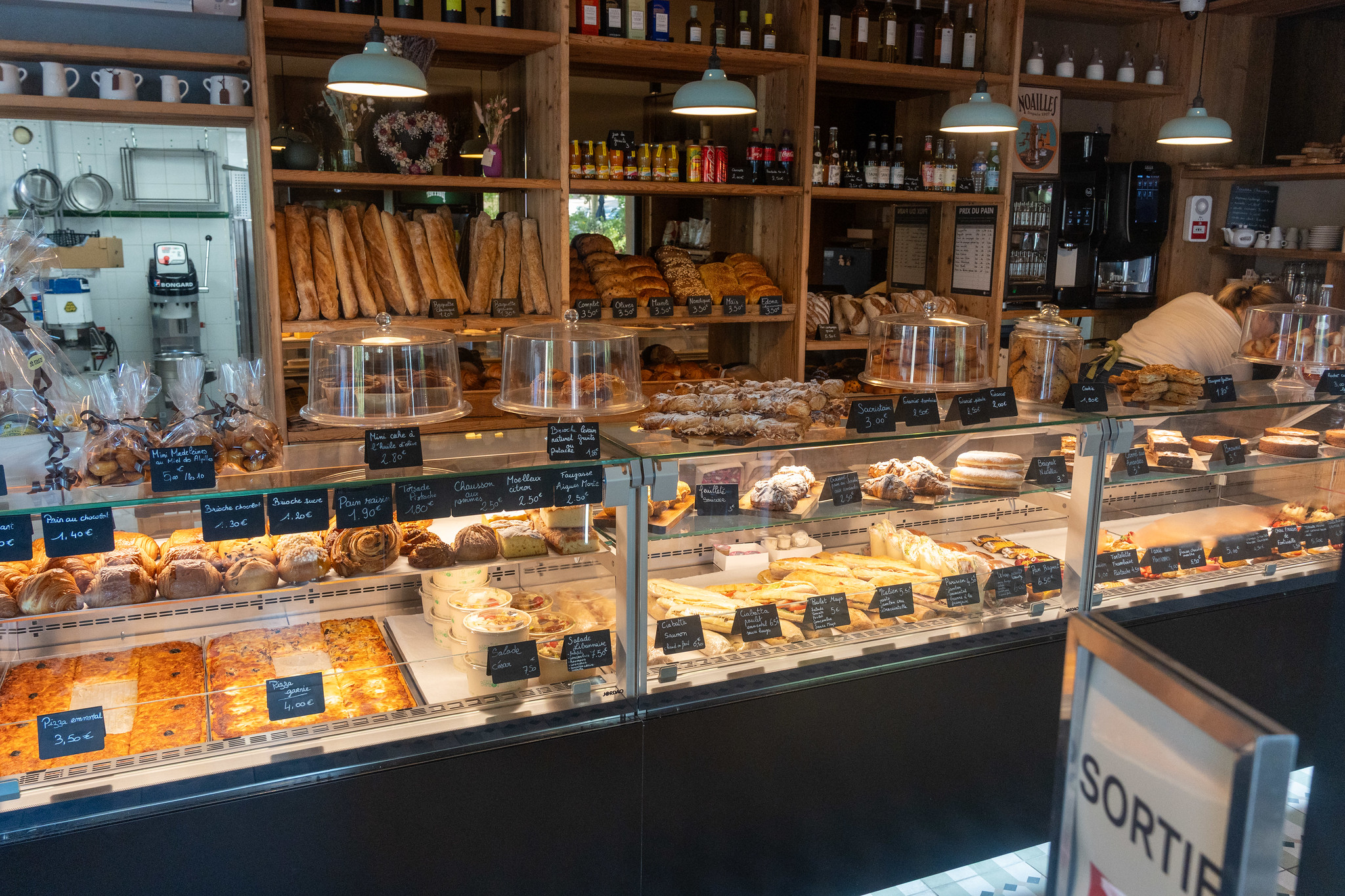
Sunday was not the only timetable I had to learn. When I ride far by bicycle, I burn energy and get hungry, so my custom is to eat lunch twice: once around ten or eleven, and again around two. In France, however, there was nowhere to eat a meal at ten. Most places served lunch only during an extremely short window, roughly noon to 1:30. More than once I walked into a place that was open, only to be told that until noon they could serve drinks only. So that was how it was. In a foreign land, I could not simply bring my own rituals and expect the world to bend around them. Instead, I learned the technique of stopping at bakeries. Every town, no matter how small, had one. They were open from early morning until evening. Croissants, baguettes, sweet pastries - all of them shockingly cheap, and all of them delicious.
Once I had learned to move with the timetable of the shops, the kitchen tools were waiting for me. In the Amboise house, the kitchen had salt and three kinds of vinegar, but no pepper. How is that even possible? The surprises continued after I started cooking. I began pan-frying chicken in oil and reached for a lid to keep the oil from spattering. No lid. Wait, how do people make fried eggs? After boiling pasta, I realized there was no metal colander for draining it. With the pasta in danger of going limp, I hurriedly consulted Gemini. Things so obvious I had not even thought to check simply were not there. The people who live here must make even similar dishes in completely different ways.
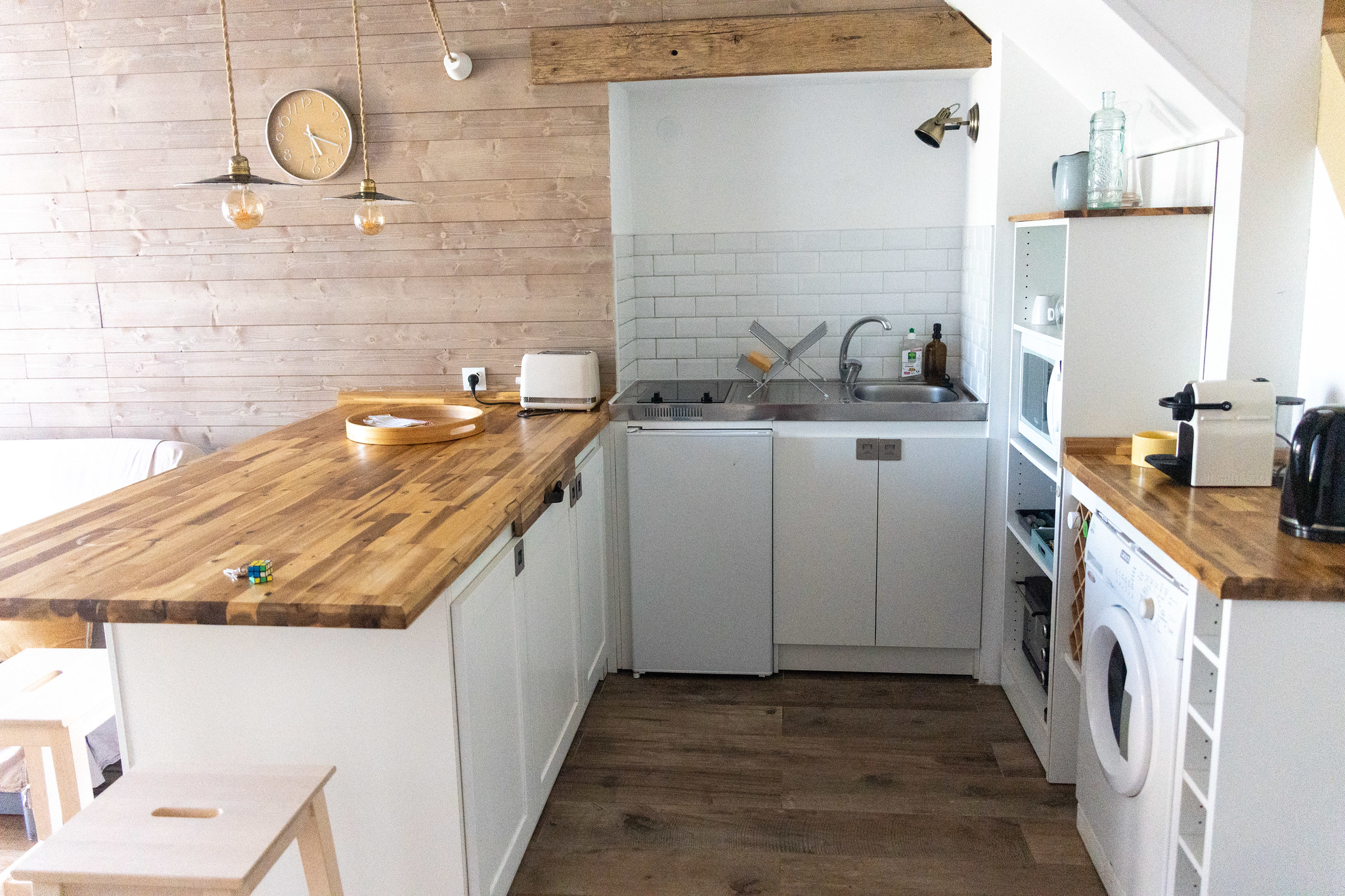
Because I changed houses every week, the surprises changed every week too. In the second week’s house, I was astonished to find there was no cutting board. Gemini brushed it off cheerfully: that’s common, you just cut things in midair. I was astonished all over again. Is cooking without a cutting board even possible? Maybe what I had thought was a cutting board had actually been a wooden platter for serving bread at the table. It had been a long time since daily life itself had felt this fresh.
It was not only the use of tools. In a foreign country, manners lodged much deeper in the body, invisible until then, suddenly rose to the surface. At a highway service-area restroom, there was no toilet seat. I consulted Gemini, and it answered brightly: yes, that happens a lot. I see. So I was the odd one out here. I wiped the rim with toilet paper, then laid out more toilet paper as a temporary seat. Even so, I felt a strong resistance. When I think about it, I have always found the human sense of hygiene, of purity and impurity, deeply interesting. In India, toilet paper was not common; instead, washing with water was the mainstream method. Logically speaking, water may well be cleaner than smearing dirt around with toilet paper. I understood that in my head. And yet I could never bring myself to put water on my hand and wash my own backside. It is embarrassing to imagine myself as logical and rational. In the end, I am just another human being, a product of habit. I want to be freer from these mysterious shackles that bind me.
Understanding the reason does not necessarily solve the problem. Still, once something that had seemed merely unreasonable has a name, I stop feeling angry. The same thing happened with the trains.
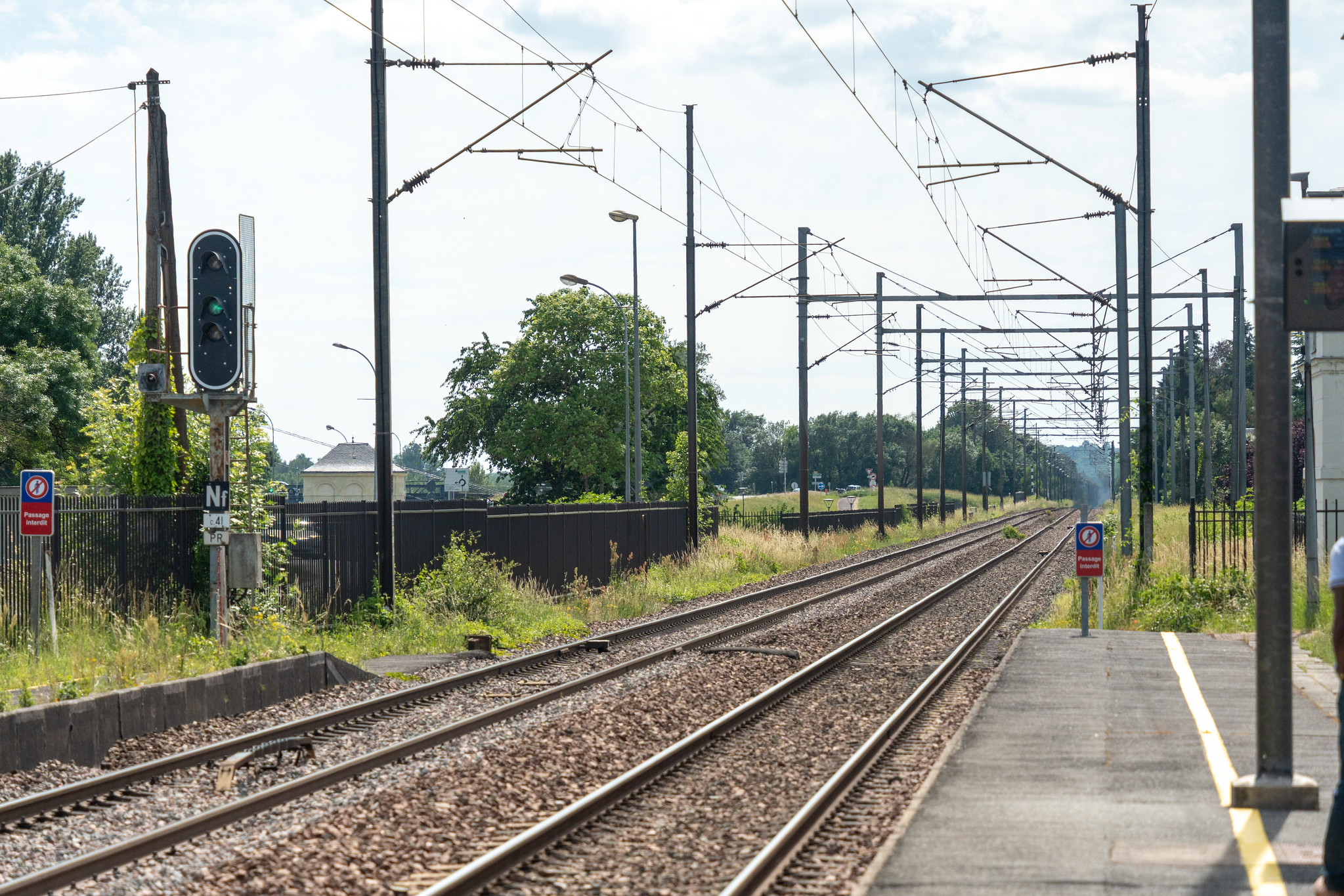
One morning, I went to the station planning to take a train somewhere far away. Departures appeared on the electronic board, but the train I wanted never showed up. I asked another person at the station, and they told me it had been canceled.
After a little more investigation, I discovered that, of all things, today was a strike day. Every year, apparently, certain days are set aside for strikes, and I had happened to land on one of them. On this line, the number of trains had been cut roughly in half. From a Japanese or American point of view, if a strike were scheduled, I would expect it to be advertised loudly in advance at every station. Is that not the point of a strike in the first place, to appeal to as many people as possible and put pressure on management? I was impressed that strikes could be woven into daily life so thoroughly that they had their own dates on the calendar. I too had carried the image of France as a country of strikes, but now I understood: oh, so this is what that means. Once I could fit it, however tentatively, into a frame of understanding, the irritation vanished.
In this way, during the journey, I cleared one small adventure of daily life after another. Even when I could not clear it, I at least learned the name of what was happening. If I went into a bakery, I did not have to become a lunch refugee. I learned that I read signs not by intuition but by training. If a kitchen had no colander, I could drain pasta by shifting the pot lid slightly. And there was one more technique I gradually began to learn: the sounds of French.
During the trip, Gemini taught me the rules of French pronunciation. A final x or s is not pronounced. The sound of h is ignored wherever it appears. So Alpe d’Huez is not pronounced with a separate h sound; it is closer to Alpe d’Uez. Croix de Fer comes out closer to “kwa duh fair.” Words I saw again and again began to reveal their meanings without my having to look them up. Croix, for example, means cross. In train announcements and other places where the electronic board and the audio announcement played at the same time, sounds that had seemed like flowing water when I had just arrived slowly began to separate into what felt like linked words.
In the final week, in a small Alpine town I passed through, I went into a bakery as usual. Normally I would have pointed at the display case to order. This time, I gathered my courage, kept my finger down, and said, “Un chausson aux pommes.” The woman behind the counter hesitated for a moment, repeated “chausson aux pommes,” and picked up the apple turnover I wanted with her tongs.
At the little stand in front of the shop, I savored the taste of a small victory. It was sweet and delicious. When it comes to making bread, the French are the best in the world. And that day, I bought it without pointing.