(If you have not read the prologue, start here)
It was the first time grime on a car had ever felt passionately alive. The dirt was all on the front, the kind that tells you this thing had been running and running. Maybe it was melted rubber from other cars’ tires. It was pitch black.
During my first week in France, I visited Le Mans, a city already charged with anticipation for the 24-hour endurance race coming the following week. At the automobile museum, the history of the race that is practically synonymous with the city was displayed with pride. A race that has continued for more than a century creates culture, rituals, and countless dramas simply by continuing.
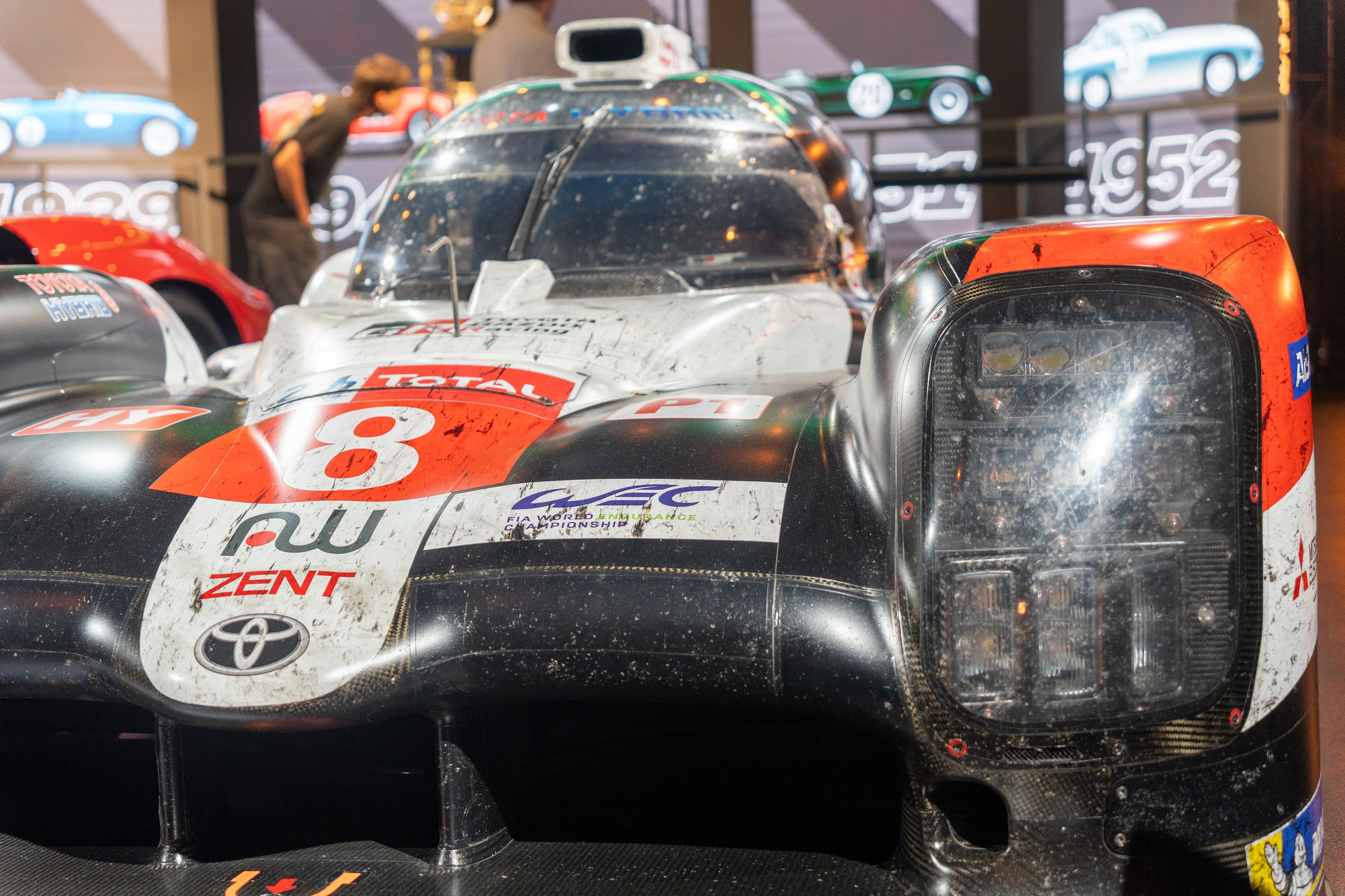
There was a Toyota shaped unmistakably like the Le Mans prototypes of recent years. It was displayed still filthy, raw and immediate, as if it had finished the race only yesterday. So this is what it means to keep running for twenty-four hours. There was also the Mazda with a rotary engine that earned Japan’s first overall victory. Even I knew that story. I looked for Ford GT40 to satisfy my American pride, and was disappointed that I didn’t see it. Every single car in that museum must have carried an engineer’s obsession, the romantic dream of someone willing to fund it, a driver’s suffering, and the fever of the crowd. The thoughts of so many people, invisible but unmistakably present, moved me deeply.
That same first week, I also visited Leonardo da Vinci’s workshop in France. Take the famous Mona Lisa. For an oil painting, its gradations are astonishingly delicate. When you think about it, that sort of thing is easy to imagine in watercolor, but it should be difficult in oil. According to the exhibit at the workshop, Leonardo painted it by applying paint thinned to an almost impossible delicacy, letting it dry, then layering it again and again. The time spent on its making: eighteen years. Since the work was interrupted by his death, technically the work was never finished, even after that much time. When I paint watercolors, I usually call one finished after about two hours, so eighteen years feels almost beyond comprehension.
When you build up layer after layer over that kind of span, perhaps the right word is not “make” but “grow.” I cannot help feeling that even he may not have had a clear final destination in mind. Maybe it was more like: let’s stay with this painting and see just how deep it can become. I imagine that was the spirit of it.
France has such a long history that everywhere I went, traces of different eras were threaded vertically through the same place, layered up like the Mona Lisa into a rich presence: ruins, buildings, works of art. Amboise was like that too. It held memories of the Renaissance, of da Vinci’s final years; but if you go back another thousand years, the first king of the Franks and the king of the great realm to the south once faced each other on a river island just a short walk from here, confirming the boundary between their powers.
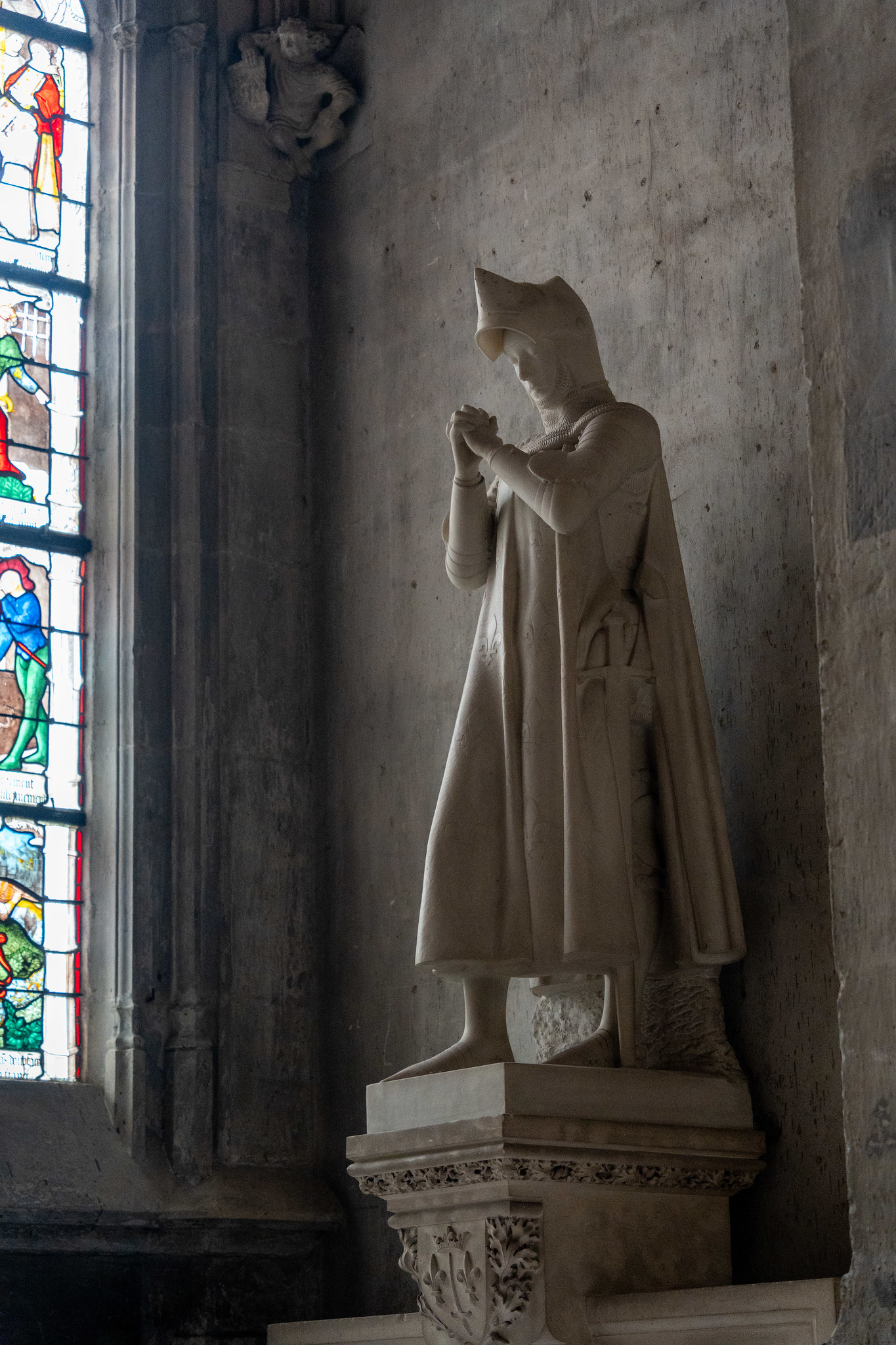
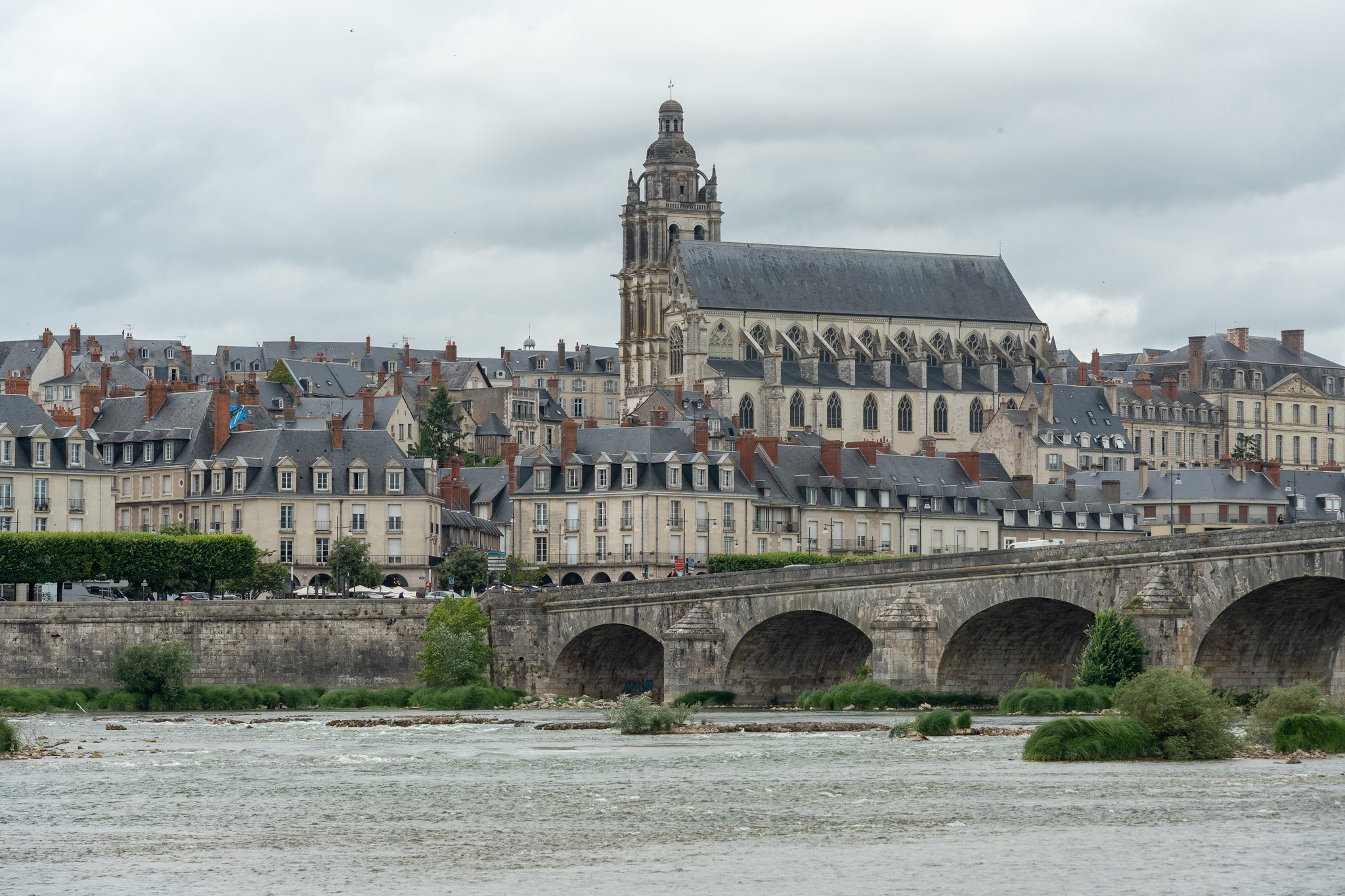
There was a horizontal thread as well. In books and podcasts I had encountered the stories of heroes from the Hundred Years’ War, people like Bertrand du Guesclin and Joan of Arc. First-rate material, shaped by first-rate storytellers into narratives that pulled me straight in. As I rode my bike, the places from those stories began appearing one after another between the vast wheat fields. A sturdy stone bridge that had stood since the Middle Ages. Ah, so Blois is here! The city of Orléans, reached after spending a whole day riding 100 kilometers. So the Orléans of the Duke of Orléans is this city!
Once I was there, the underlying logic that had not been spelled out in the stories began revealing itself naturally. In the past, rivers were the expressways for moving goods. It was no accident that these major cities stood along the Loire. As I rode beside the river, I noticed that the wind was always blowing from the Atlantic. Which meant that when you went downstream, you could let the current carry you, and when you went upstream, you could use a sail. Of course this area developed around such a convenient river. A river this wide must have been hard to bridge. Naturally, places with islands in the current became important bases. Orléans has an island, and it is also closest to Paris, so of course it would become the most important point. On and on the logic unfolded.
The warp and weft bound themselves tightly together, and stories that had once had no spatial depth inside me suddenly rose up in three dimensions, vivid and tactile, carrying smells and landscapes with them.
In Loupiac, a small town near Bordeaux, I saw the ruins of a bathhouse from a Roman villa. It sat beside what looked like a private house, covered only by something like a construction-site shelter, and I had to go back and forth several times thinking, it should be here somewhere, before I finally found it. A cheerful old man who seemed to be in the middle of a house party, and who spoke no English at all, came along with me, either as my guard or my guide.
The Romans settled this area before the Common Era. They were also the ones who brought grapes and wine-making. The enormous vineyards of the Left Bank, now almost synonymous with Bordeaux, were created later by draining wetlands. The Roman Empire fell, but the wine they brought to this land continued to develop and went on shaping the history of Bordeaux. Wait a second. Does that mean the Bordeaux wines I had been diligently comparing every day were the summit of two thousand years of history…?
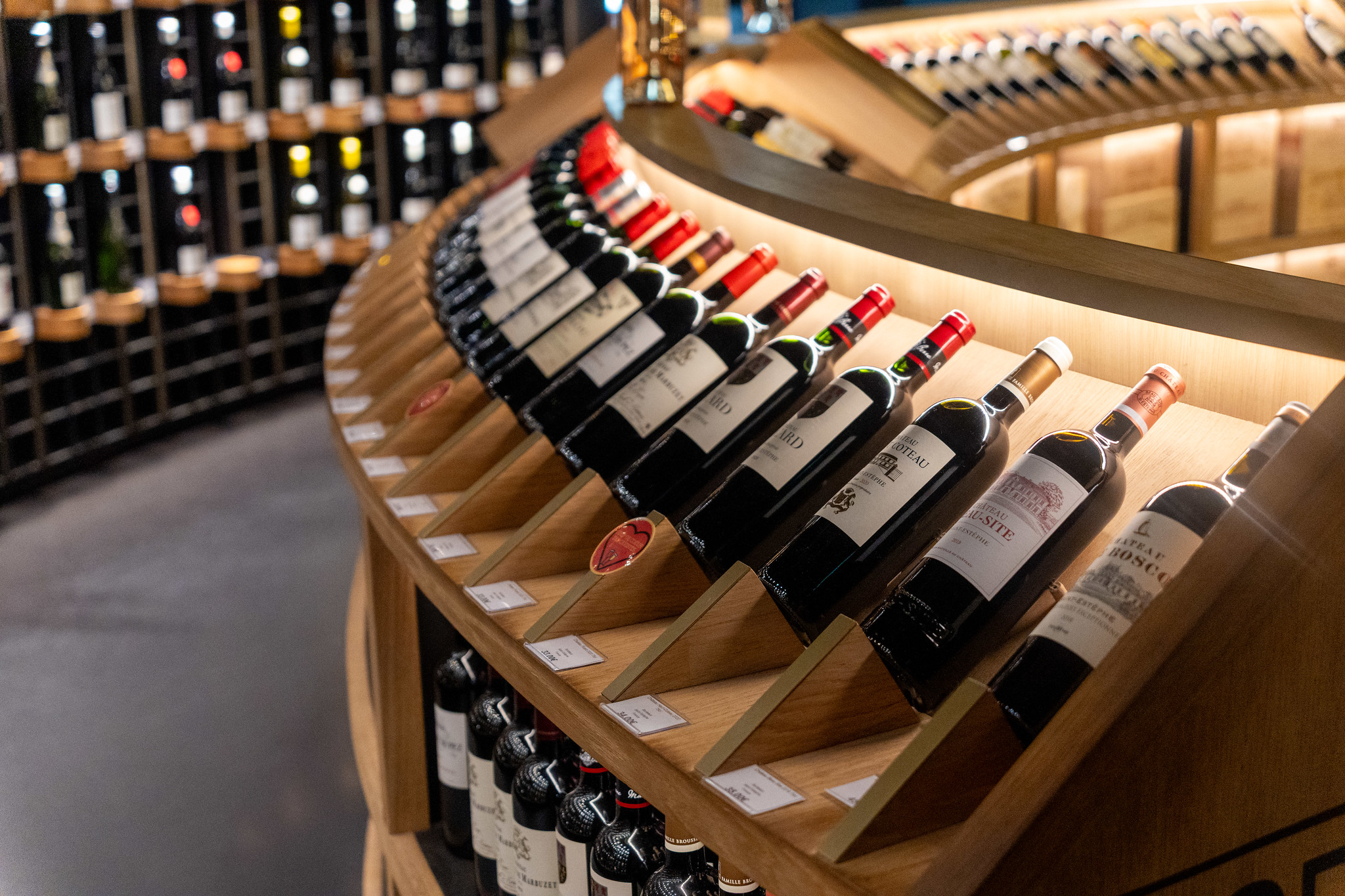
The classification system is one of the things that makes Bordeaux wine so interesting. It was created only about two hundred years ago. Compared with two thousand years of history, it is practically a recent phenomenon. It made me laugh, like beating the final boss in a game only to have a secret boss appear behind it.
Something that has lasted only two hundred years might vanish after only a few hundred more. But something that has lasted about two thousand years is unlikely to disappear in the next two hundred. Which means that humanity, several thousand years from now, will probably still be drinking wine. I let the timeline zoom out in my mind and imagined clinking wine glasses with Julius Caesar before the Common Era, and with someone two thousand years in the future, someone with an unpronounceable name living on another planet orbiting another star.
When I came back from that little vision, what was in front of me was the old man’s smile and the brutally hot afternoon air of a heat wave. I was glad it was a short ride that day. All right. Time to get home quickly and drink some sweet Loupiac wine. The bottle I had bought at the supermarket the day before was waiting in the refrigerator.
The breath of Rome remained everywhere in France. Ever since binge-reading a looooong history series on the Romans, I have been a huge fan of Rome. Lyon was a stop I made while moving my base from the third week to the fourth. It has a great river connected to the Mediterranean, and here the river splits in two. Of course this would be a Roman base. And with this terrain, they would absolutely build the city on a hill safe from river floods. I took the funicular up. On the hilltop, where the sunlight seemed even more dazzling, Roman ruins were lying all over the place, exactly as expected. My circuitry was beginning to synchronize with that of the Romans.
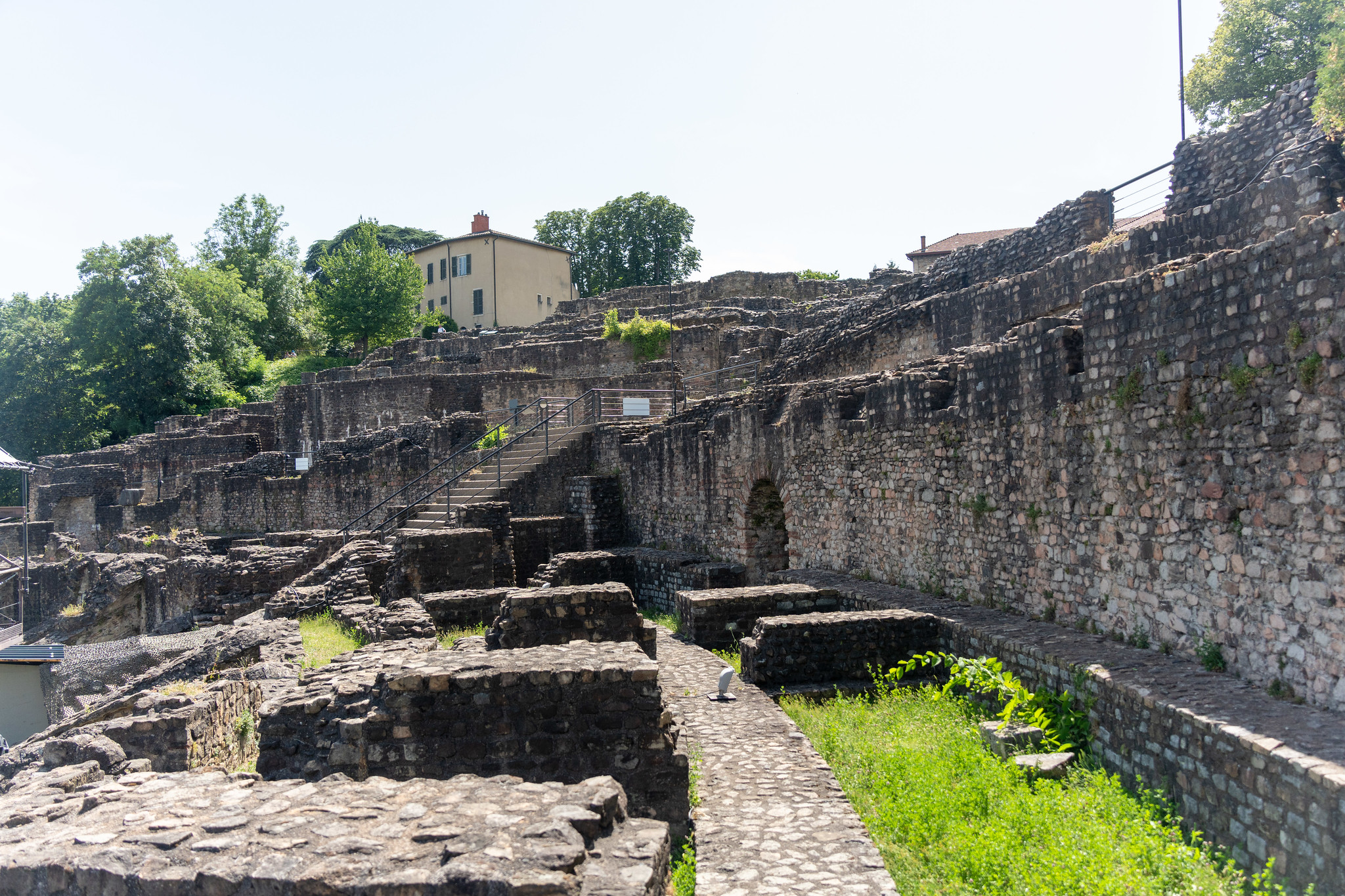
It was so hot I thought I might die, so I happily escaped into the Roman museum built beside the ruins. The interior was dark and cool, completely different from outside, and it held many stones carved with letters. Looking closely, I saw that the inscriptions on every stone used a consistent typeface, and the placement of the letters was remarkably well composed. Every stroke had been cut in a V shape, so when light struck it, the shadows rose sharply and beautifully. They paid attention even to this, then systematized it, so that countless stone inscriptions could all be made with the same quality.
With ruins and sculptures and museum exhibits, it is easy to look only at the visible things and stop at, how beautiful. But for me, Rome’s greatness lies in the software: things like the method for carving a groove into stone. This level of polish, two thousand years ago…!
Roman rule was social institutions, legal systems, logistics, currency: an astonishing infrastructure package in which all of those things came ready to install. But people tend not to notice that software. They look only at the hardware.
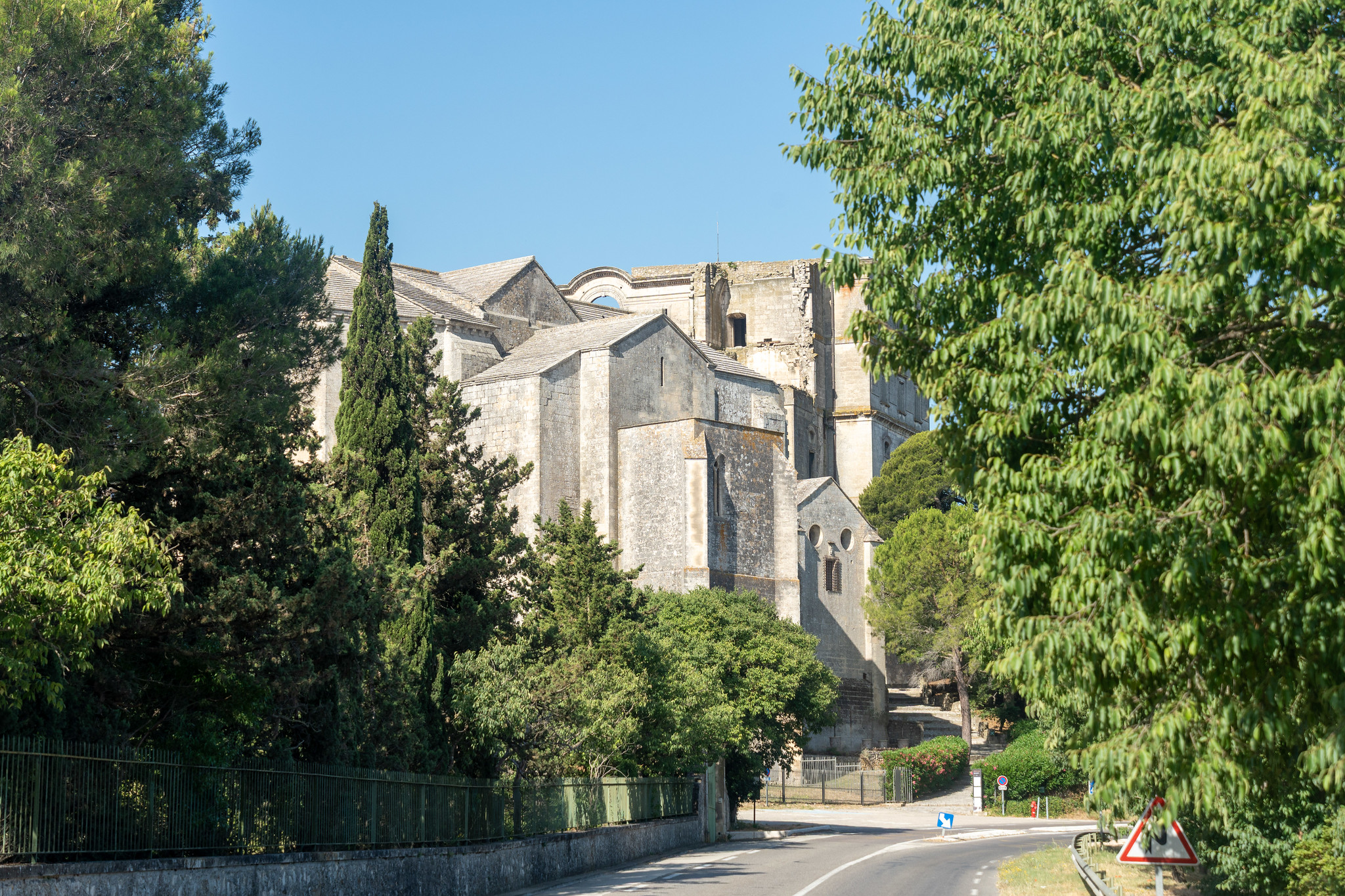
I remembered the abbey I had seen in Provence. I stopped there imagining a gentle, graceful monastery surrounded by lavender, only to find that it was, in fact, a full-on medieval fortress. It had a tall tower with a commanding view, where lookouts apparently watched for pirates and raiders; when danger came, they rang the bell and brought nearby residents inside to shelter. Monks fighting to protect the people around them in the harsher medieval centuries after the Roman Empire declined. And in Arles, a town only about fifteen minutes away, there still remained the public baths, forum, open-air theater, and aqueduct built by the great empire that had ruled the entire Mediterranean. Human beings create organizations to bring their feeble powers together and turn that into something great. The realization that people two thousand years ago had gathered that power into systems far more sophisticated than anything people had managed one thousand years ago humbled me.
After leaving Lyon and heading toward the Alps, the mountains grew steeper with astonishing speed. Just a little earlier, looking at the V-shaped grooves the Romans had carved into stone, I had been thinking: stone can be cut this beautifully. But standing before the exposed layers of Alpine rock, I was forced to think something else: rock can bend this much.
People carve letters into stone. Empires carve institutions into society. But even that stone, over a still longer span of time, is pressed, folded, and raised into mountains. Just when I thought two thousand years was an immense measure of time, an even greater time rose up before me.