(If you have not read the prologue, start here)
In the third week of my bicycle journey through France, I was staying outside Avignon, a city in Provence. The day before had been a short ride, so today I meant to go far. I would leave while the morning was still cool, take the north wind known in this region as the mistral at my back, ride south to the port city of Marseille, and return by evening train. That was the plan I had been preparing.
But just before leaving, I noticed two things. The forecast that day called not for a north wind but a south wind. And if I went to the nearest station in ten minutes, I could catch the first train to Marseille. If I went south by train first and rode north with the tailwind from there, I would not have to worry about the return train at all.
Logically, that was better. But it meant spending the most beautiful hour of the morning inside a train. And could I even make a train leaving in ten minutes? Standing at the threshold, half in and half out of the house, I worried far more than the question deserved and grew irritated at my own inability to decide. While I thought, the minutes kept disappearing. In the end I rushed to the station and jumped with my bicycle onto the train just as it pulled in. At moments like this, I wish I could be more relaxed, less tangled in thought, more willing to let the day unfold.
The first train was almost empty when I boarded, but people got on at every stop. At the terminus in Marseille, TGVs were arriving, shops lined the broad concourse, and crowds moved briskly in every direction. The number of people and the speed of their steps were nothing like the small-town stations I had been riding through. Before Marseille was a tourist destination, it was a major city where actual life was already underway.
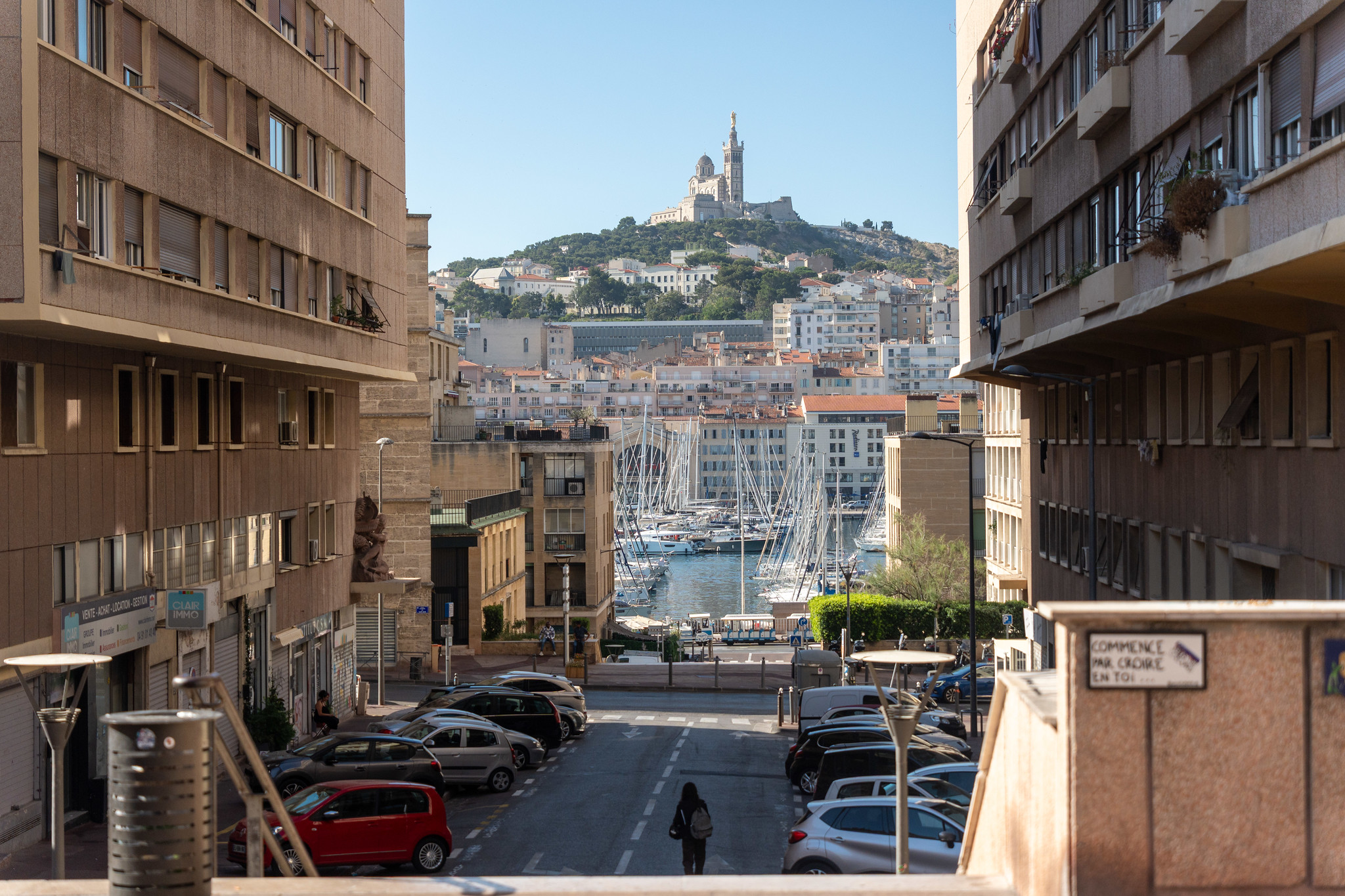
Marseillais were impatient. Red light or not, if no car was coming, people crossed. I threaded my bicycle through that current and headed toward the hill. Marseille is a city of the sea, but also a city of slopes. That’s usually the same thing, as behind a harbor deep enough for ships and protected from the wind, the ground rises sharply. From the first thing in the morning, my legs were put to work climbing toward the cathedral on the hill, visible from all over the city.
Inside the cathedral, many model ships hung from the ceiling, and paintings of ships covered the walls. People had probably offered them as prayers for safe voyages. That kind of prayer for practical protection in this life felt unusual to me in Christianity. If anything, it resembled a Shinto shrine, something Eastern. You could also say it suited this city perfectly.
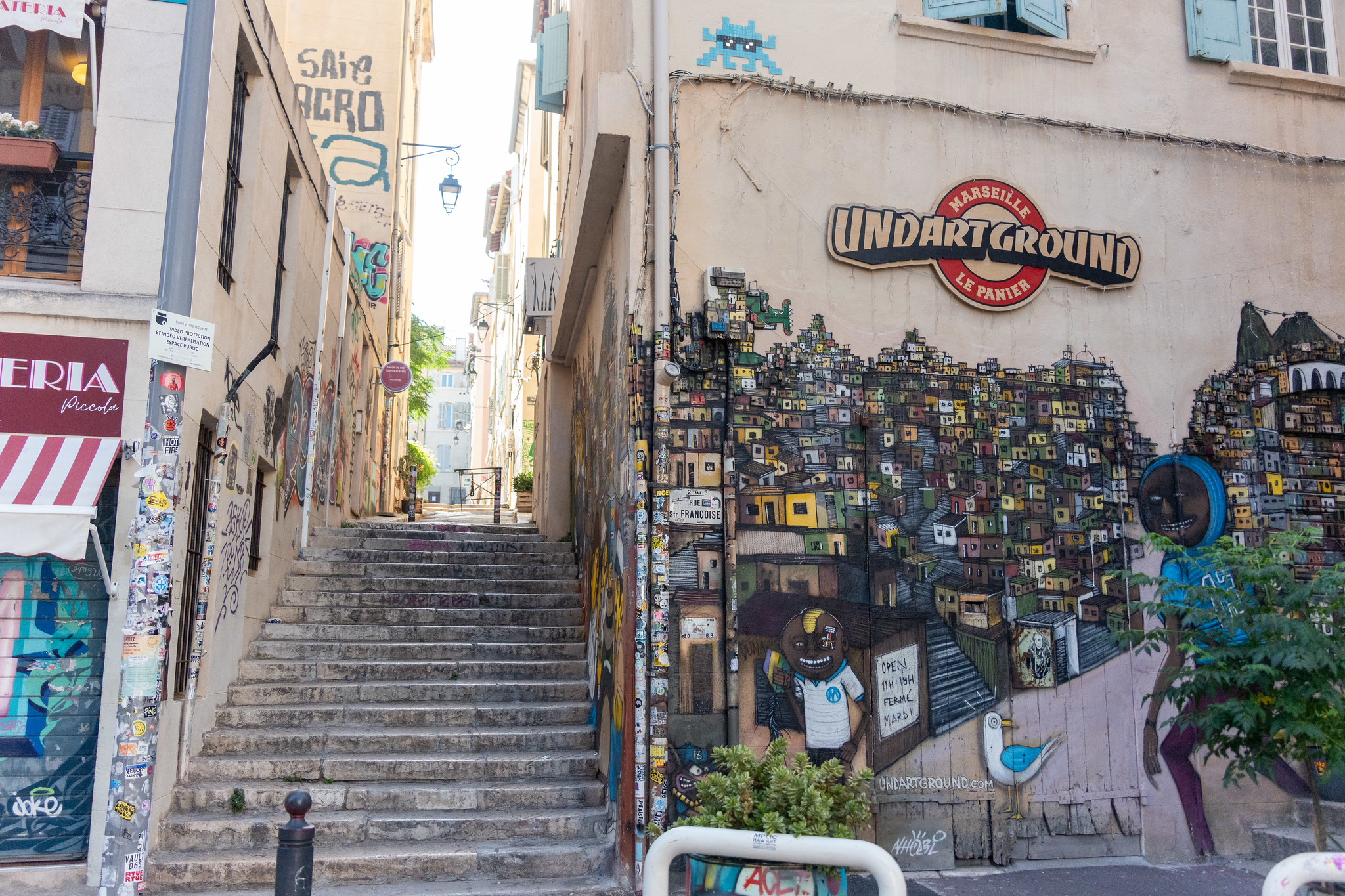
From there I reached Le Panier, the old working-class quarter. It had the feeling of a dense, rough-edged entertainment district, messy but vibrant, overflowing with human life; even in Marseille, it seemed especially alive. Spray art covered walls everywhere. Strange objects and decorations appeared on houses here and there. Odd little shops stood beside doors whose destinations I could not imagine. Since it was still morning, the district was asleep, but I could easily imagine how full of life it must become at night. Sea-related motifs overflowed everywhere. I felt the pride of the people of Marseille in their city, the breath of Marseillais themselves. Human presence was thick there, if I can put it that way. It was not a beautiful place, exactly, but it stayed with me.
Leaving the center and heading north along the water, the main figures of the scenery changed from shops and homes to warehouses and piers. At a shipyard stood enormous yachts for the wealthy. Trucks waiting for cargo formed lines. In one of them, only a pair of legs stuck out from the driver’s-side window. The sight left a surprisingly strong impression.
Through that bleak city of machines, noise, and steel, an older woman was walking. In the instant I passed her, she plucked a piece of roadside grass, lifted it to her nose, and smelled it. That small gesture blew through me like a cool wind. I want to have that kind of room inside me. One of the delights of travel is that encounters lasting only a second can remain so vivid.
I left the city behind and rode on through unknown, rough-edged suburbs on broken pavement. When I turned at L’Estaque, the largest climb of the day began. I passed beside a quarry, and by the time I emerged near Marseille airport, the coolness of morning was gone. Sunlight bounced back from the road and burned my body from above and below.
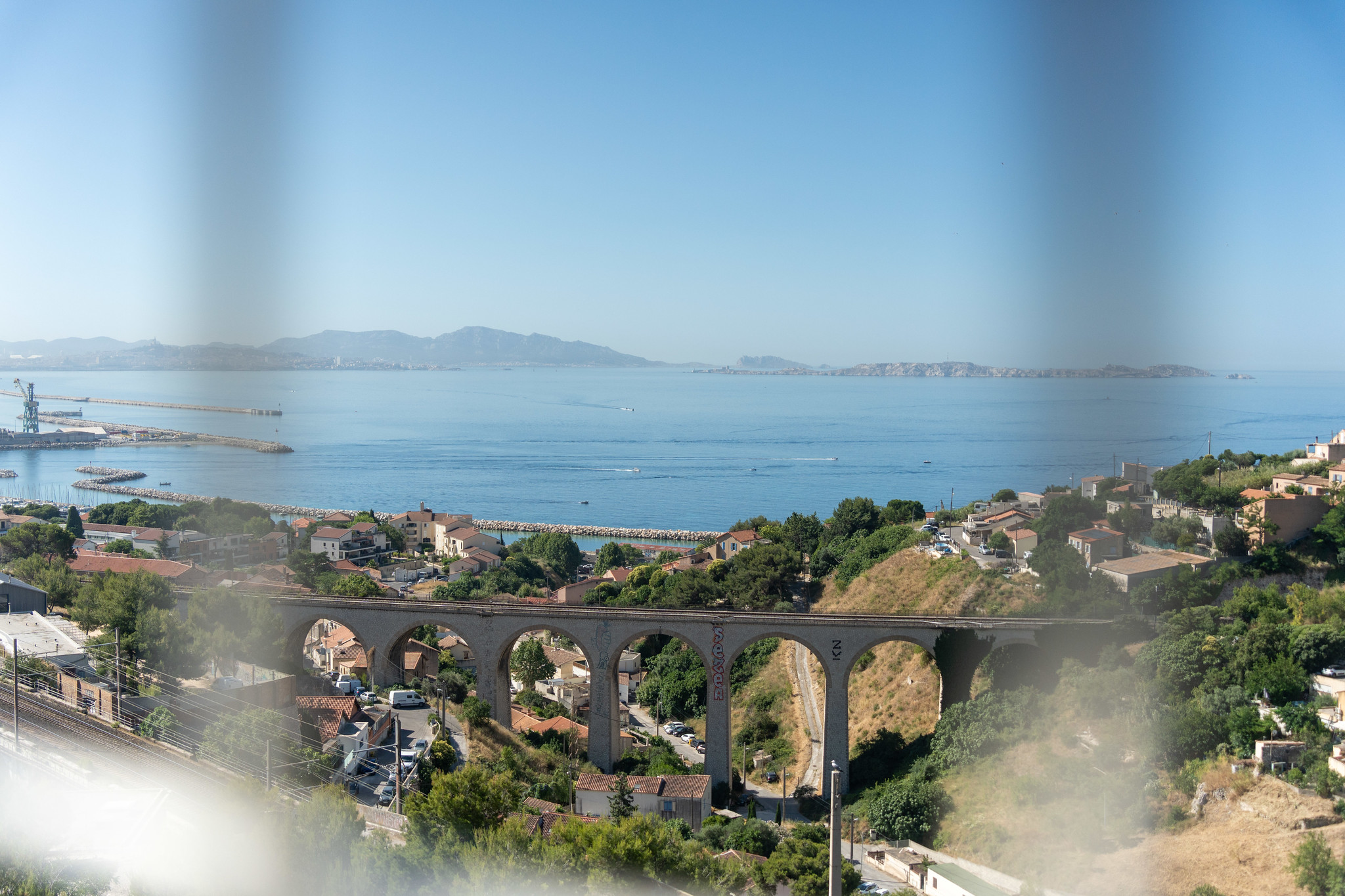
Then the sharp shadow of an airplane fell onto the road and overtook me from behind. A moment later, the roar of engines came down from overhead. For one instant I was racing a plane just before landing. Since it was already on final approach, the other side was not even trying. Even so, its shadow vanished ahead in no time, and I alone was left on the hot road.
When I became aware of my hunger and stopped, there was a brasserie right in front of me. In France, not many places are open before noon, but this one was already welcoming customers. The two women working there did not speak English, and I did not understand their French. They were probably explaining the plat du jour, but I could not find any blackboard with the menu written on it.
I answered with the intention of saying that anything would be fine, and one of them took me all the way to the kitchen. Instead of explaining the food in words, she showed me the dishes themselves and let me choose. Dessert worked the same way. What came out was a homey plate of bell peppers stuffed with rice and meat, baked until tender, followed by apple pie. Both were delicious.
The restaurant’s name meant “Little Norway.” Bright red, the color of Norway but also perfectly at home beside the Mediterranean, appeared all through the place, and under the vivid red sunshade a breeze was passing. To a body that had ridden alone under strong sun, thirsty and hungry, food, drink, and shade all returned at once. Sitting there eating, I truly came back to life.
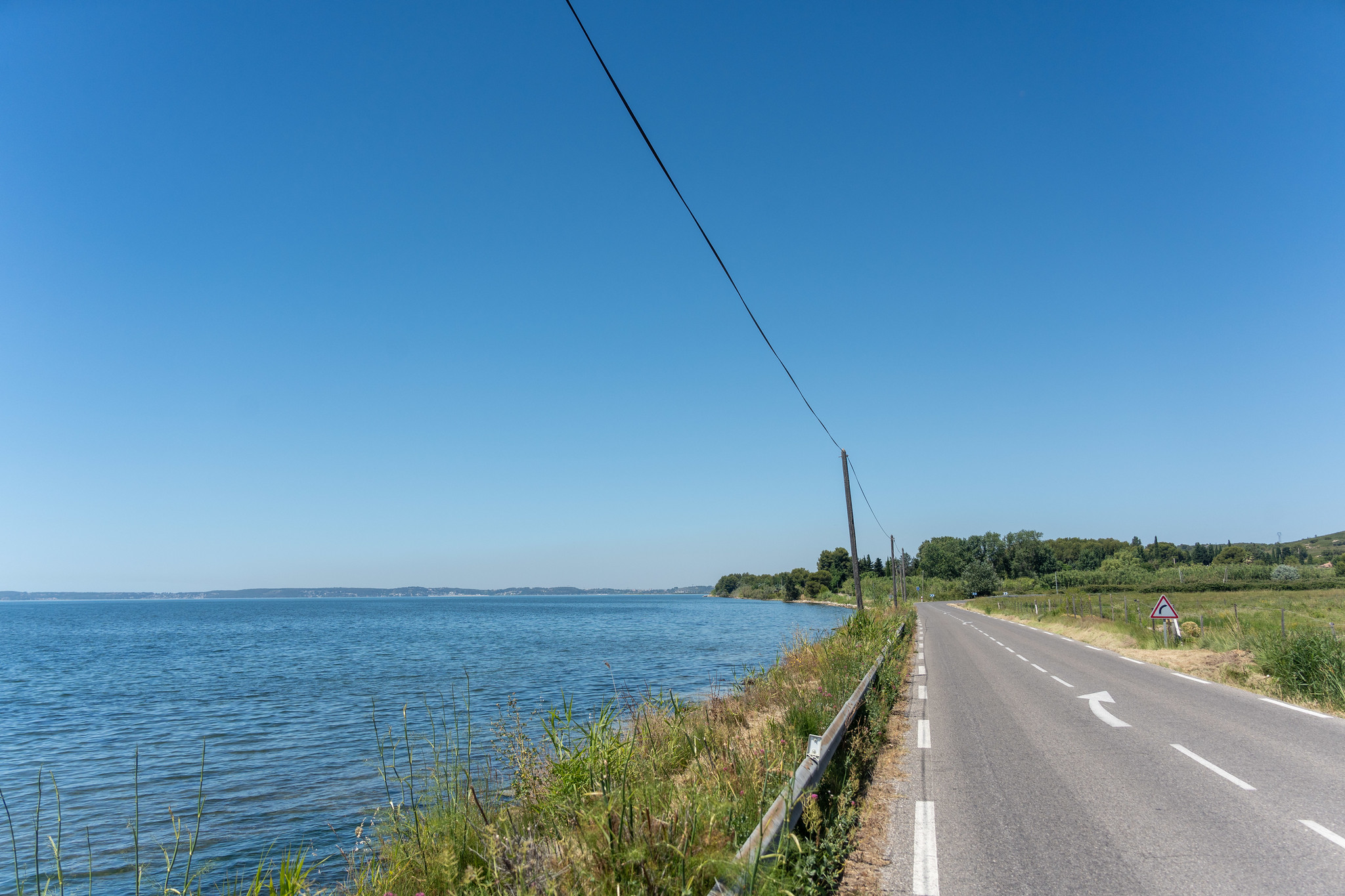
When I left, the town fell away for a while. The road along the lake was so broad it almost felt like a highway, the cars were fast, and I rode the shoulder of a long straight road with a slight chill of fear. The midsummer land seemed to be asleep under a spell. Nothing blocked the blazing sun, and I began to feel that without this lake everything here might die out and turn into something like Nevada. It was a harsh place.
After I left the lake, small towns began appearing again. At each one I rested, rotating through beer, Coke, and ice cream. I knew I was fairly tired, but fortunately the long daylight would gie me plenty of time to ride slowly and easily. If I could just survive the hottest part of the afternoon, I could go home whenever I wanted without thinking about train times.
By the time I reached Salon-de-Provence, I stopped at the soap factory Sacha had told me about. It still seemed to preserve the tradition of Marseille soap, made from olive oil and alkali from ash. It was a little chemical factory from another age. Liquid was poured into enormous vats and stirred; once it hardened into great blocks, machines cut it into squares and stamped them. It gave me the impression of an eighteenth- or nineteenth-century factory: immense tools of iron and wood. It was also slightly funny that Sacha, of all people, had become so devoted to soap. He had told me he made his own laundry detergent.
In this town, it was ice cream’s turn. A body in motion wants sweetness too. And the heat was at its peak. Delicious. As I ate, I watched people pass. One thing that can be hard to take on terraces at these French places is how many people smoke. Cigarettes have become an important prop in the performance of French cool. A beautiful young woman will trail smoke with practiced fingers. That, too, is France.
In the next town, Sénas, it was beer’s turn. Downtown was a lunchtime ghost town, but one bar was open, and I was saved. I fled into the dark interior and rested for a while. The local craft beer I drank there was scented with lavender. Provence, indeed. I felt as if I had received the feeling of a maker whose name and face I did not know.
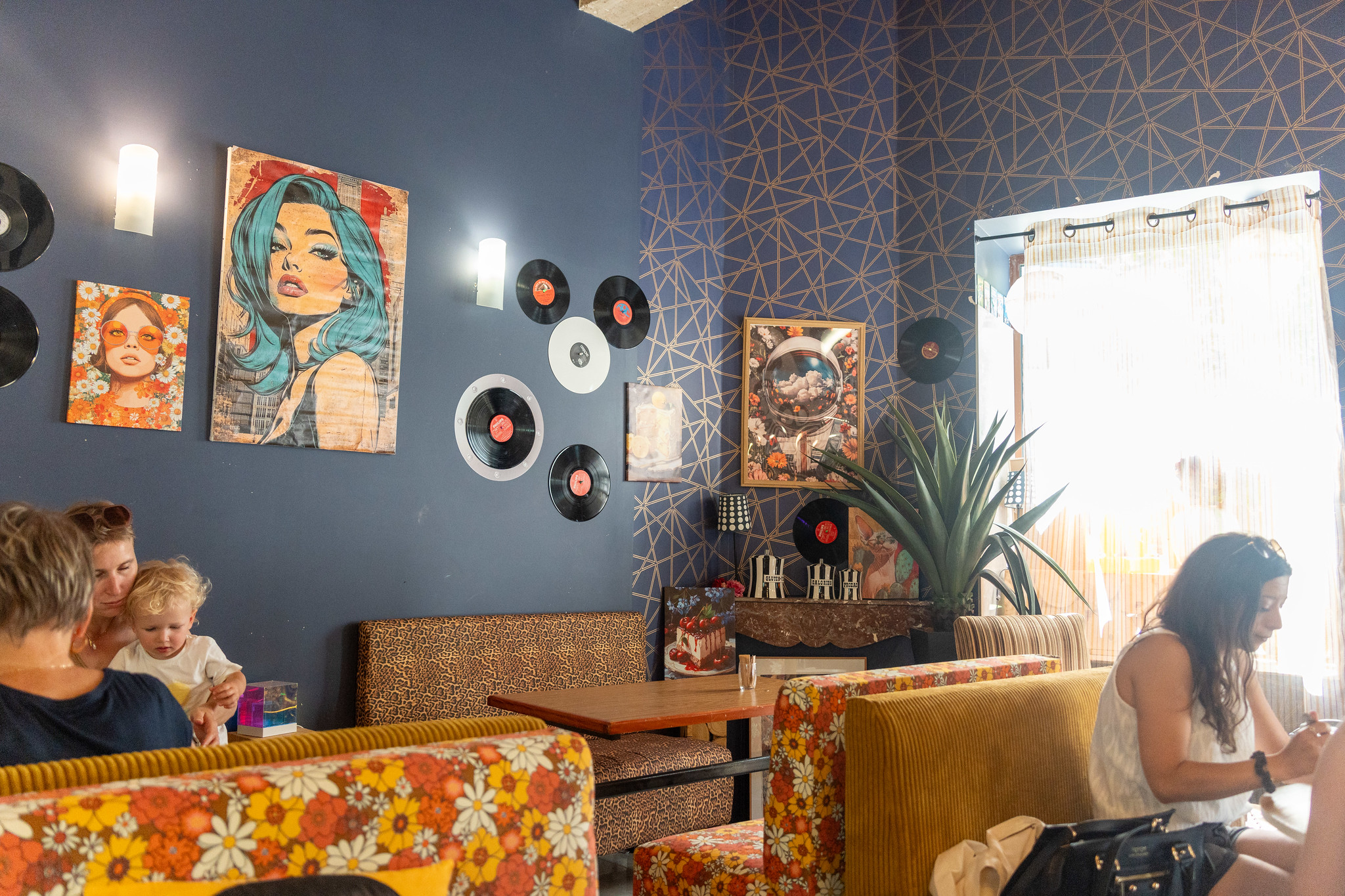
The next town was Cavaillon, a melon-growing region. Next came ice cream again. When I went in, I was delighted to find an avant-garde shop, another thoroughly French piece of stylish eccentricity. Since this was melon country, I ordered melon ice cream, but unfortunately it was not very good. Still, the atmosphere inside was wonderful. All day I kept encountering things that packed a lot of France.
Cavaillon also had a medieval Jewish quarter, so without thinking too deeply I went to see it. “Quarter” was almost too large a word; it was really only a single street. Jews were persecuted then, but because this area belonged to the Papal States, they were apparently allowed to live here. The conditions must have been terrible. Still, their synagogue remained, and a woman guide showed it to me. I was the only visitor.
I imagine people lived packed into places where almost no sunlight entered, but this synagogue alone was a bright room with a high ceiling and sun pouring in. Amid such difficult lives, perhaps this was the one place where their hearts could rise and be cleansed. Because they were cut off from the outside world and apparently did not have the technical knowledge to build a synagogue themselves, local French carpenters made it for them, which left the interior decorated in a French royal style. That too was fascinating. I found myself thinking that evolution happens like this, through isolation from the outside world.
When I was a child, I thought about Judaism rather simplistically: if people persecute you that badly, why not switch to Christianity? You must be awfully devout. As an adult, my thinking has changed. There is, of course, the core of faith, such as belief in God. But Judaism is no longer only a religion. It is a way of living, food, celebrations for children as they grow, rules of conduct, an entire mode of existence. Visiting Israel many times gradually made me see it that way. Human beings are creatures who cannot change their way of life even when they might want to. It is similar to the way I still eat white rice and celebrate New Year after twenty-five years in America. So I imagine the Jews of that era could do nothing but continue the way of life they knew. And when people with different cultures try to live together and cannot manage it well, they naturally begin clustering with people like themselves, and separation is born. Tragically, it is deeply human.
The guide explained that this beautiful synagogue had actually been for men only, while women were gathered in another room below, so I went down to see it too. In contrast to the decoration and sunlight upstairs, the lower room had cold exposed rock and only one small window. Jews were oppressed, yes, but across the world there can hardly be any group that has been oppressed as universally as women. Even this Jewish community, itself on the side of the oppressed and surely aware of that pain, created another hierarchy inside its small group. The sadness of human beings. Discrimination, separation, the structure itself does not seem to have changed. Only the concrete attributes change: Black people. Immigrants. Since I was the only guest, I exchanged these thoughts with the guide and spent a while considering the depth of human nature’s burden.
When I stepped outside, the sun had tilted a little and the heat had softened by a small degree. Before heading straight home, I decided to stop at L’Isle-sur-la-Sorgue. A painting of this town hung in the house where I was staying, and I wanted to see the real place.
The town had formed on an island in the Sorgue River. A few days earlier, I had seen the source where groundwater suddenly emerges from between rocks as a large river. That water flowed all the way here, split into several channels through town, and turned mossy waterwheels. Even while riding through the streets, I could constantly hear the stream.
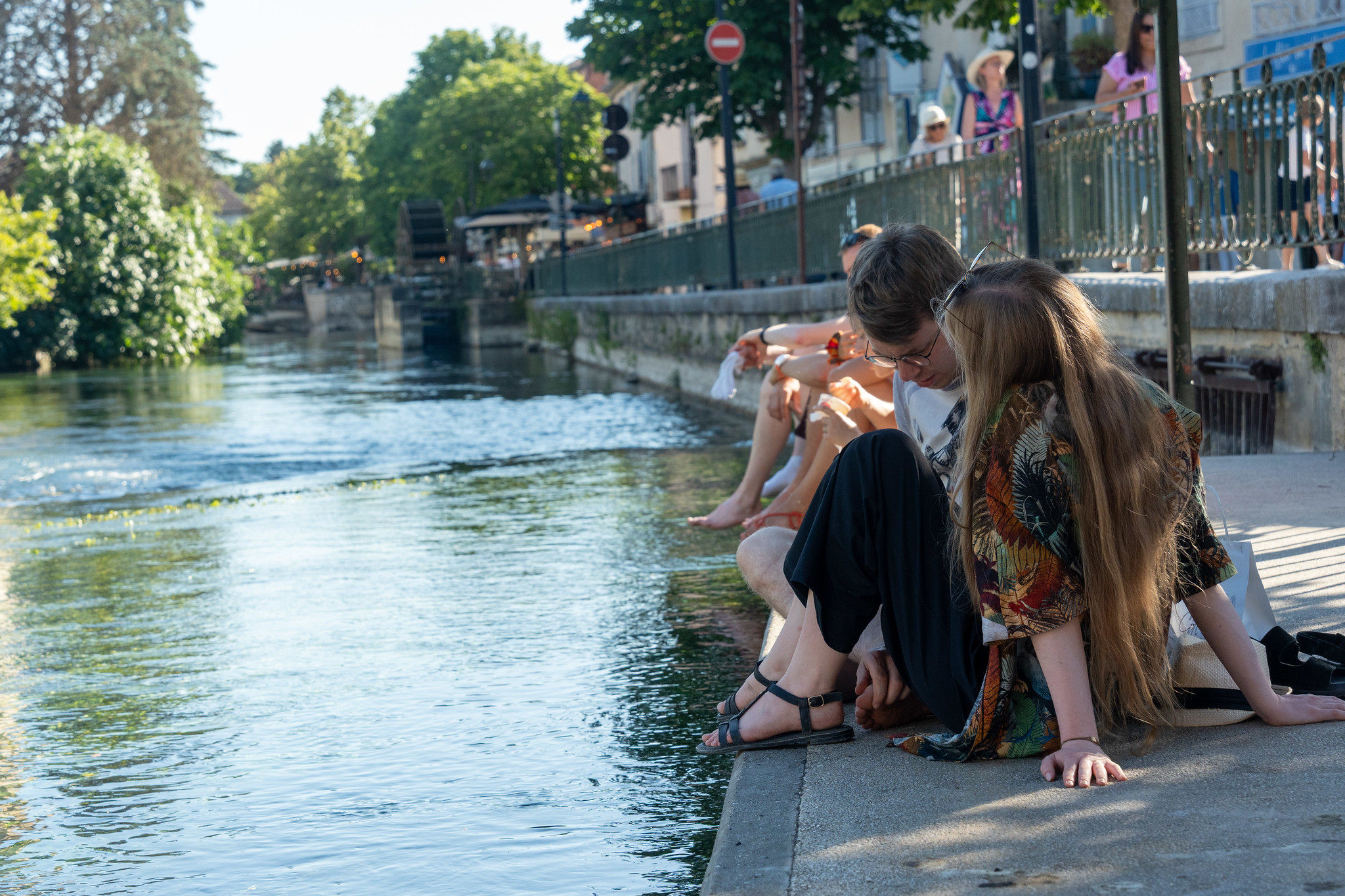
Along the riverbank I found a place where I could sit and dip my feet directly into the water. I stopped the bike, took off my shoes and socks, and lowered my feet in. The water that had come from underground was astonishingly cold, and at the end of a scorching day it felt wonderful. Water plants drifted past, tickling the soles of my feet. The evening sunlight on my back was gentler. Around me, other people were putting their feet in the water in the same way and talking. Since morning I had passed through stations, a port, industrial zones, and dry roads; at last the speed of my body slowed to the speed of the river.
I wanted to eat dinner there too, but back at the house I still had food that needed to be eaten before the weekend. Watching people gathered for a World Cup qualifier and a dog romping nearby, I drank just one beer and started home.
When I reached the house, the day’s distance stood at 130km. It had been my first long ride in a while. The ships in the cathedral, the trucks at the piers, the woman smelling grass, the airplane’s shadow, the two women at the brasserie, the giant soap vats, the two prayer rooms above and below, the water plants stroking the soles of my feet. I had received too much in one day to digest at once. This density of life that travel raises up in me is what draws me back like a drug.