(If you haven’t read the prologue yet, please start here)
On the final day of the journey, the true protagonist was not the sea, but the land, and the water carving its way through it.
Forecasting rain for the afternoon, I decided to complete my ride in the morning. My destination was the grand bridge spanning the strait; having come this far, I desperately wanted to see the region’s famous tidal whirlpools.
Over breakfast, I researched the water management of the great river that pierces through Tokushima. The previous evening, while crossing it by bus, I had been absolutely overwhelmed by its immense width—easily stretching over a kilometer. Furthermore, it lacked a dry riverbed; water filled the entire channel to the brim. It was incomparable to any other major rivers I knew in Japan. What exactly was going on here?

I discovered that rain clouds from the Pacific dump all their moisture onto the southern mountain range of this island. All that water funnels into this single massive river and flows directly into Tokushima. That explained the staggering volume. Historically, it was feared as a wild, untamable river, earning a fearsome reputation as one of the nation’s three most dangerous waterways. Conversely, the province to the north, which I rode yesterday, faces a chronic water shortage. The historic irrigation ponds I had seen scattered among the fields were built precisely to meticulously hoard this scarce water. The relationship with water here is completely different from regions where massive rivers naturally nurture plains. Even with such efforts to collect water, it was never enough. Because wheat could grow with minimal water compared to rice, the locals cultivated wheat, which evolved into a culinary culture dedicated to enjoying noodles—Udon. The savory broth comes from the dried sardines of the Seto Inland Sea. Thus, the local Udon was born from the marriage of an arid land and a bountiful sea.
My discoveries didn’t stop there. A massive reservoir upstream collects the water, and a smaller dam downstream serves a staggering purpose: it channels water through a massive tunnel carved entirely through the mountain range to supply the drought-prone northern province. Rerouting rivers, building dikes, and creating floodbasins—the water management I had seen in other historic regions belonged to the feudal era. But 20th-century water management relies on massive dams and water tunnels bored straight through mountains. The grand vision to bore through a mountain range just to bring water to an arid province, the advancement of civil engineering to realize it, a central government capable of negotiating regional water rights, and the wealth to make such a colossal project possible—it completely overwhelmed the feudal methods in every aspect. This is modern water engineering! I was deeply moved. Rain falling in the southern mountains flows through one province and is tunneled through mountains to save another. It was a dream collaboration of the entire island.
Filled with excitement, I hopped back on my bike and cruised down the quiet, early morning coastal road with a favorable tailwind. I spotted land across the water—not the mainland peninsula I suspected, but the large island bridging the inner sea. The base of the great bridge spanning the strait would likely bustle later in the day, but it was too early for anything to be open. The current was rushing fast, but seeing the actual whirlpools would require waiting another hour. Since I had other places to visit today, I reluctantly turned back to the hotel.

I had initially planned to pack up my bike here and switch entirely to the train. However, blessed with an unexpected blue sky, I altered my plans and decided to cycle all the way to Tokushima Station. I had mistakenly assumed the local coastal station sat on the main line between the two major cities, but riding directly to the main hub of Tokushima proved faster and simpler for returning to Takamatsu. I could just store my bike and luggage at the central station.
Crossing this grand river on my bike today—the same river I had crossed by bus yesterday—felt less like a river and more like an ocean inlet carving its way into the land. A river of this magnitude must be unique to this region.
Tokushima Station seemed to double as a railyard, with countless tracks branching out. Two-car diesel trains sat idling, emitting a deep mechanical roar and the distinct scent of diesel fuel completely absent from electric trains. It possessed a unique character missing from sleek urban stations, and I fell in love with it instantly. This must have been exactly how regional hubs felt in the mid-20th century.
Despite the forecast, there was no sign of rain; the weather was only growing finer. I decided to pedal my way up to the mountain restaurant my friend had reserved for us. I climbed along a winding river road through the valley. The asphalt was smooth, and the gradient gentle and manageable. Escaping the clamor of the city after so long made my heart dance. Small hamlets dotted the landscape, with locals tending to their farms. The sea is wonderful, but the mountains are spectacular.
Having left early, I was on track to arrive ahead of schedule. While wondering how to kill time, a roadside ice cream shop materialized right on cue. Another road bike was parked outside. They sold ice cream crafted from local strawberries. The dim interior, lit only by soft sunlight filtering through the windows in contrast to the intense glare outside, exuded a wonderful, rustic charm.
The place my attorney friend had booked was a spectacular French restaurant that wouldn’t have been out of place with a Michelin star. From the outside, it looked almost like an industrial factory, but past the entrance, it was beautifully renovated. Inside was a single large room featuring an impressive open kitchen and just three tables, managed entirely by a young chef and a female staff.
The multi-course meal unfolded with house-made specialties, ingredients the chef had personally foraged from the mountains, and produce from local farms. He even purchases entire animals to butcher them himself. The back of the menu was a literal roll call of local residents and farmers—just like a movie’s credit roll. Each bite offered an initial flavor that subtly transformed on the palate, leaving an entirely different aftertaste. Every dish felt like a piece of culinary magic. Some were vibrant with color; others offered a playful variation in texture. Immersed in conversation and savoring every bite, three and a half hours vanished in a flash. I never knew food could orchestrate such a beautifully melting passage of time. I’ve had fine French dining before, but nothing like this.
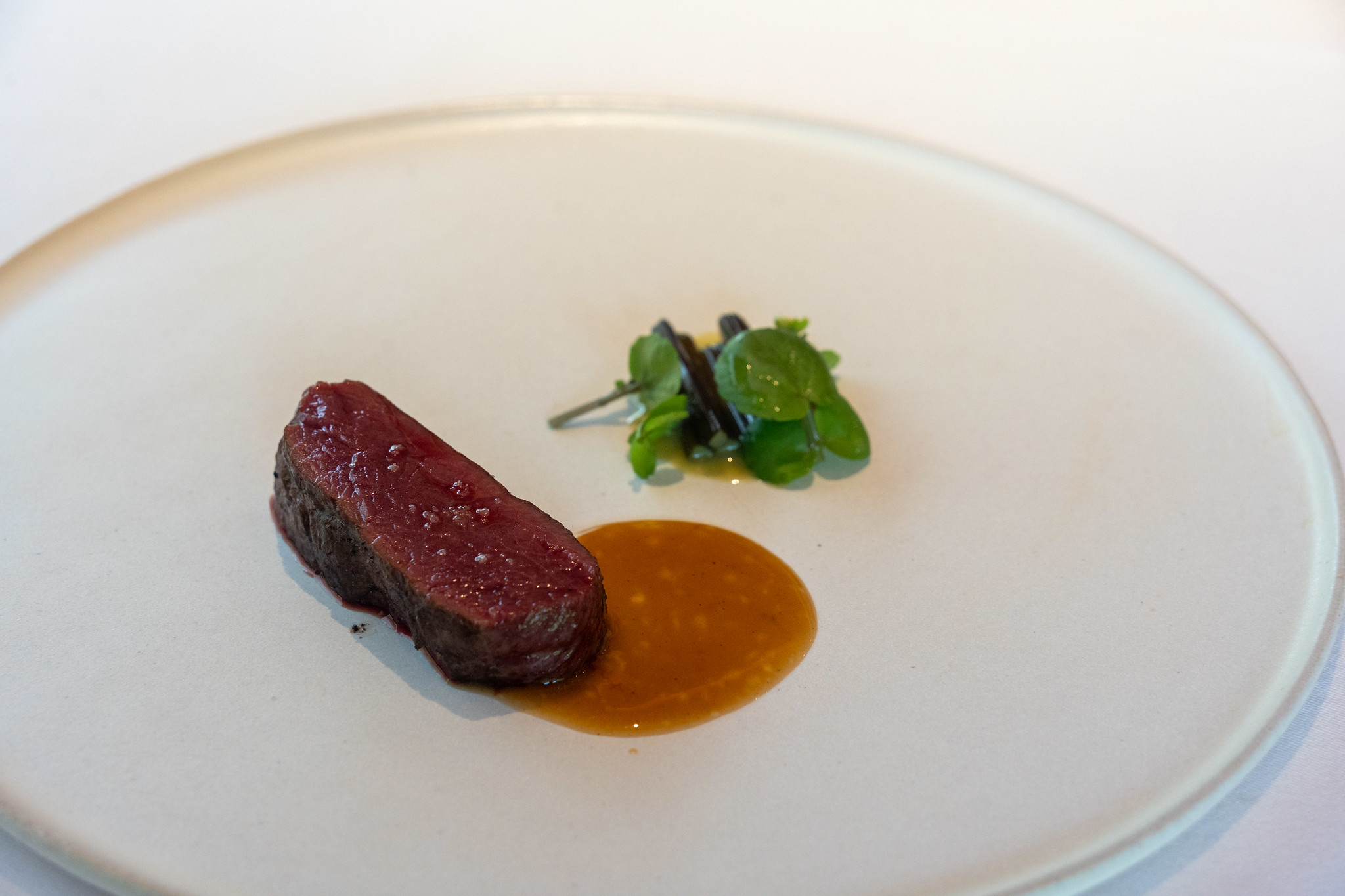
Realizing he was running late for his next meeting, my friend rushed off. I waved him goodbye and smoothly coasted down the mountain slopes on my bike. Having saved my legs for most of the day, I still felt full of energy.
I rushed to tour the museum at the historic castle ruins before closing time, then washed off at a public bathhouse near the station. Two local youths were chatting amiably in the bath, and I couldn’t help but eavesdrop on their conversation. They were eagerly anticipating an upcoming group blind date. Best of luck to them!
I packed my bike into its travel bag, and determined not to waste a single second of my remaining time, ordered a local craft beer at the station basement. Passing through a ticket gate manned by an actual agent rather than an automated turnstile felt wonderfully nostalgic. Just then, the doors of the limited express train back to Takamatsu swung open. I couldn’t help but admire my own efficiency in packing so many experiences seamlessly into the day.
The limited express train to Takamatsu was more crowded than expected. I ended up in the very front seat of the lead car, offering a clear view of the tracks ahead. The line was a single, non-electrified track, and the train itself was small and short. Yet, given the island’s rugged terrain, this design is remarkably rational. It allows for smaller tunnels and handles tight curves efficiently.
Remarkably, every time we entered a bend, the train body tilted sharply inward—a motion reminiscent of a bicycle. Thanks to this, the ride remained incredibly comfortable even while navigating sharp curves at speeds exceeding 100 km/h. While many trains use a passive pendulum system that reacts after entering a curve, this train possesses pre-programmed track data, allowing it to lean before the track actually bends. It’s the exact same principle used in F1 racing cars. The local railway company was actually the first in the world to commercialize this system for trains. I wondered how many passengers were aware of this magnificent feat by the local engineers. Embedding a masterpiece of technology where it remains unseen, purely for the passenger’s comfort—what a beautiful embodiment of hospitality. It is truly a classy, sophisticated touch.
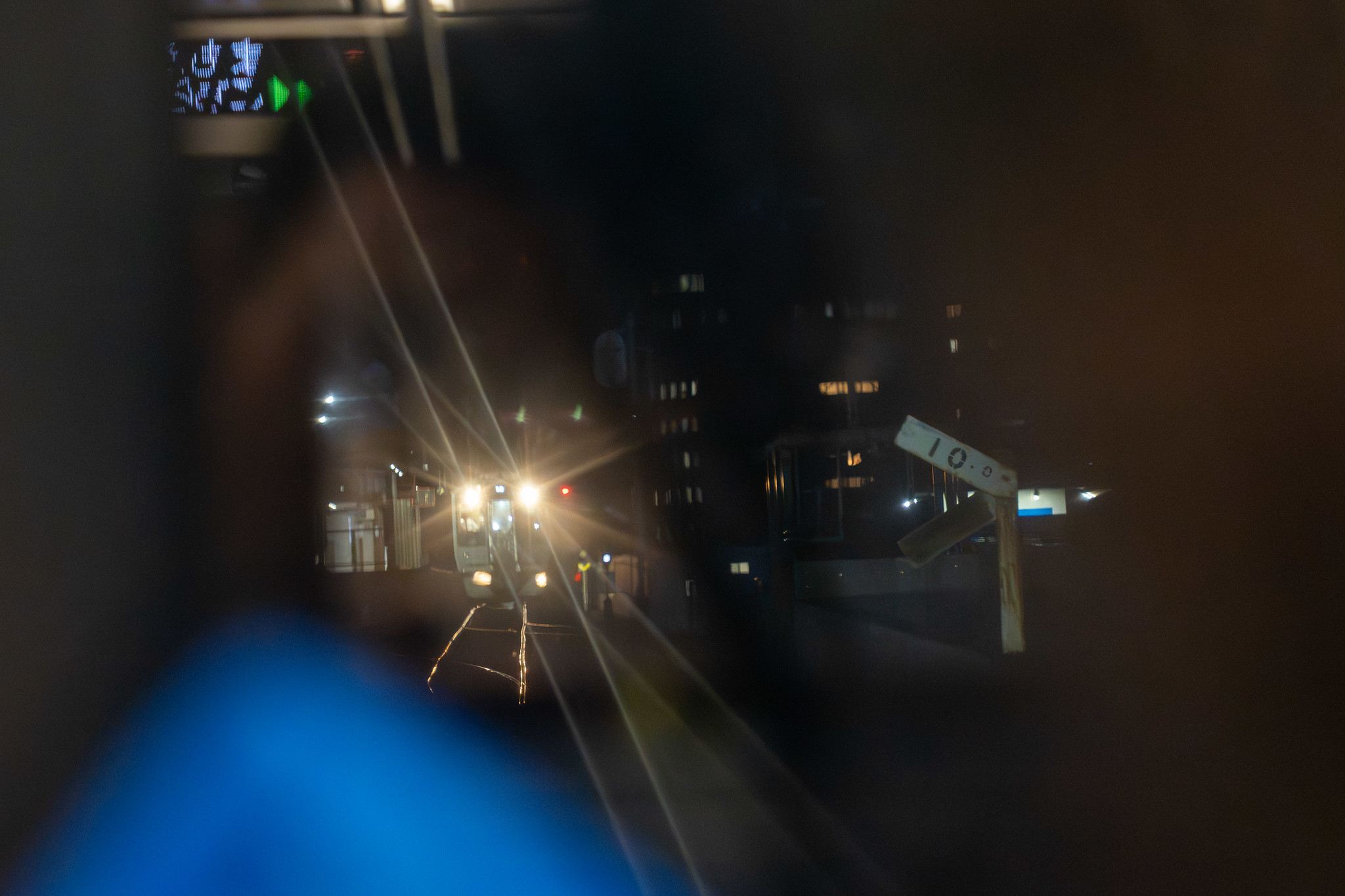
Outside the window, mountains, hamlets, and fields blurred past. Suddenly, the thoughts I had held since morning—about the water management, the exquisite lunch, and the very train I was riding—crystallized into a single realization. Water, food, railways—all of it is ultimately humanity’s response to the geometry of the land. The shapes of continents, seas, and mountains created by Earth’s whims impose constraints on the fundamentals of human activity, such as water, food, and transit. The history of creative ingenuity layered in response to those constraints is what we call culture. Everything I had experienced through my five senses on this journey was profoundly interconnected.
I had dinner at Takamatsu Station and ordered a local sake with a beautiful name meaning “moonlight on gold.” Looking up its history, I learned it was founded during the feudal era by a wealthy merchant who made his fortune trading indigo in Tokushima, bought a brewing license in Takamatsu, and began producing sake here. While Takamatsu appears more urbanized today, Tokushima was far wealthier during the samurai era. The wealth of indigo generated by that great river, combined with Takamatsu’s precious water… this sake might very well contain the water piped through the mountains from that distant river. Savoring this cross-provincial collaboration for my final drink was the perfect conclusion to the journey.
I had always wanted to ride the overnight sleeper train back to Tokyo—now the nation’s only remaining regularly scheduled sleeper train. Timing it perfectly with its arrival, I returned to the platform.
Private compartments were already booked solid when I reserved my ticket, so I ended up in the shared open sleeper area. Lying down, a partition shielded my head, making the presence of other passengers surprisingly unnoticeable. A window stretched right above me. The train glided out of Takamatsu precisely on time, and I dazedly watched the nocturnal cityscape drift by. Passing through minor local stations, unlike riding a bullet train, sparks the imagination about the lives of the people who live there, fueling a deep sense of wanderlust. Travel is not something that only exists at the end of a journey on a special, formal vehicle like a bullet train or an airplane. Simply taking the tracks, trains, and roads you know well and following them far away becomes a journey in itself. In other words, travel is a seamless extension of everyday life. Conventional rail travel and bicycle touring share this beautiful common ground.

Crossing the grand bridge to the mainland was over in a flash. I was surprised to see quite a few women and international travelers on board; it clearly wasn’t exclusive to railway enthusiasts. Tonight was completely full. Due to the firm floor, I couldn’t manage a proper sleep, only drifting into occasional dozes. But that was perfectly fine. When you’re on a sleeper train, sleeping feels like a waste of time anyway.
As the sky grew pale with dawn, I got up and headed to the small observation lounge. Only a handful of people visited the lounge at early hour. I enhanced the morning mood with a canned coffee from the vending machine. Before long, the stations blurring past the window were lined with morning commuters. The contrast between their intense reality of everyday life and my capsule of the extraordinary was staggering.
In a light drizzle at Yokohama Station, I stepped onto the platform in my cycling gear, a massive bike bag slung over my shoulder, right in front of countless commuters lining up for the inbound trains. While the world rapidly snapped back into the familiar streets, familiar stations, and everyday scenery, my mind struggled to keep pace.
And just like that, my Setouchi journey came to a close. I felt as though I had experienced a lifetime of discoveries in such a brief span. Cycling through Japan is remarkably dense with meaning. I wonder where my wheels will take me next.