Ever since I rode from San Francisco to Los Angeles a few years ago, I got hooked by long distance, multi day bike rides. The sense of adventure, encounters with the unexpected, and above all the feeling of life shrinking down to the bare minimum kernel.
This year, I sent my road bike to Tokyo, which meant I could plan one in Japan.
Tokaido has been a road well travelled since the beginning of the recorded history in Japan, until cars and rail roads upended everything. I decided to take on this route with my high school buddy.
Day 1
I rolled out from the same bike parking on the ground floor of my Tokyo apartment 5:30am before the dawn. The excitement was palpable. I’ve rolled out of this place many times now, but today my destination was a little different!
Instead heading straight to Kyoto, however, first I rode some 20km to the heart of Tokyo, where Tokaido ends. Nihonbashi, which literally means “Japan bridg”. If I go the route, I might as well ride the whole route.
Around 7am, I met up with my buddy and we took off. This was an ordinary weekday, and the city was starting to wake up. As we rode south, we witnessed the whole morning commute from the beginning to the end.
~30km radius from the city center of Tokyo is the territory of trains. Every train station is like a town. At the heart is a train station, surrounded by some commercial area, and further out is a residential area. No place is more than 15 minutes away from a train station.
During the morning commute, you see people appear from every tiny alley way, as if rain drops are forming a creek. These creeks steadily meet and form bigger flows, until they form a flood and disappear into a train station. The sheer number of humans here is just mindbogling.
In one temple we stopped by, I bought a local sweet. The woman in the shop told me her family has been rooted in this area for centuries, and previously was in the business of running a travelers’ inn. I pictured her ancestor striking up a conversation with a traveler on foot some 400 years ago in the Edo era, just like she and I were talking. I felt connected to that scene, and I loved that feeling.
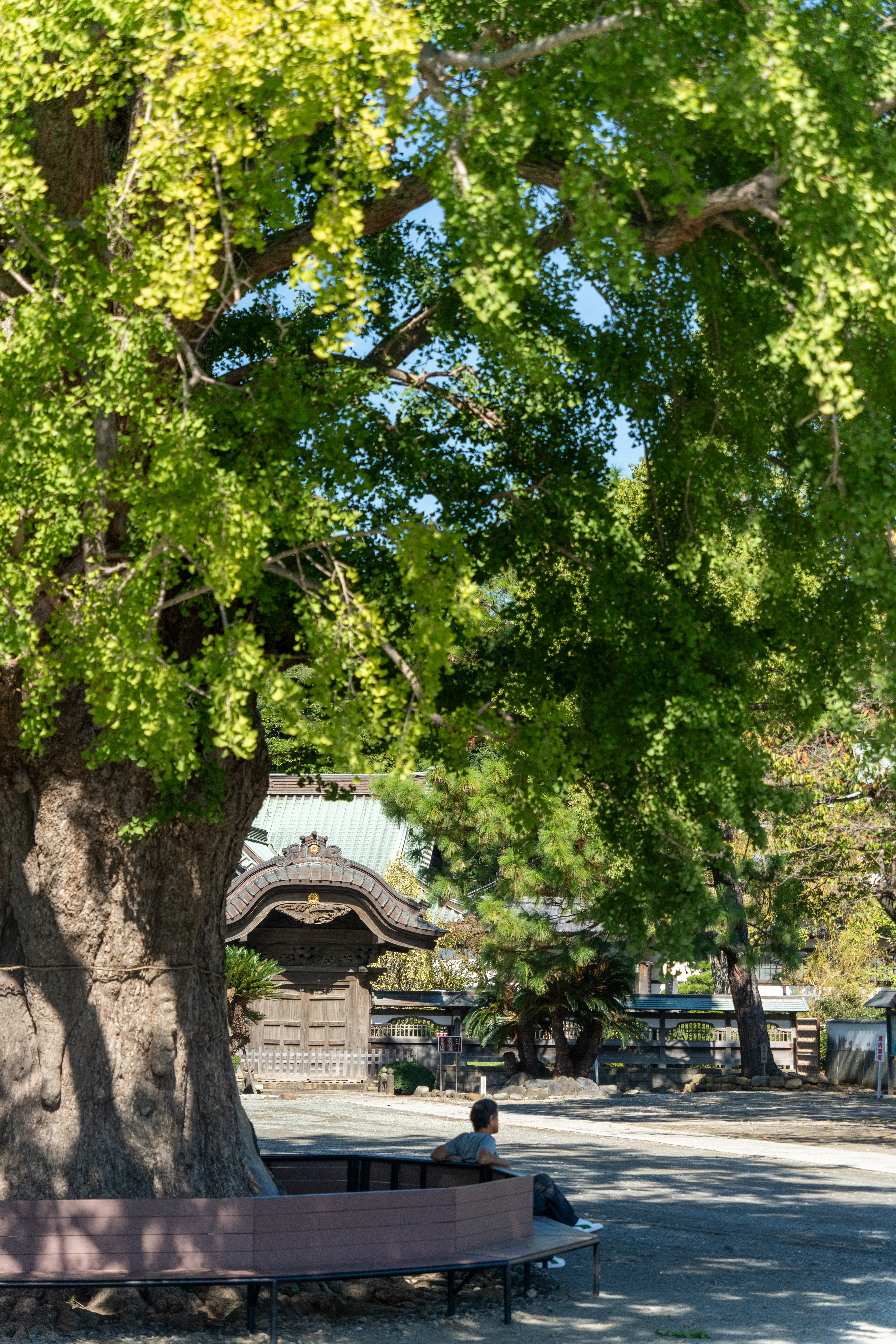
At ~80km, we arrived at the Sagami bay, facing Enoshima island. Up until this point, I had ridden before. From here on, I was squarely in an uncharted territory. Pushing the invisible boundary like that is always exciting, and on this trip we were just getting started!
The Sagami bay was gently curving toward the left, and the cycling road by the sea was filled with dragonflies. Sunny, clear blue sky. Bright silver reflection from the Pacific ocean. A classic Japanese autumn day. Joy in life can be simple just like that.
When I’m on a bike, I’m always unconsciously on a hunt for an interesting food/drink place. And when I see one, I just know. On this day, it was a local brewery. They were located in a white building perfect for this beach side city, and they had a truck parked in front selling beer.
We kept on, making a few more unplanned stops. What is a bike trip without those unplanned stops!?
Eventually we arrived at the entrance of Hakone, where the climb begins. Last 1km or so saw a crazy 21% slope. When I saw the road sign that said so, it struck fear in my heart. I don’t see I’ve ever rode a hill that steep in the past. But I didn’t come all the way to walk a bike. I did prevail, and I felt very proud.
Day 2
This day started with the only real climb of the entire trip. We left in the wee hours. We needed to cover a lot of distance today.
As we were eating rice balls at a local 7-Eleven, we befriended a local rider. He’s probably 20 years older than us, and when we told him we were heading to Kyoto, he got really excited. He gave us various advices unsolicited. It was clear he was rooting & cheering for us. I love it when what I’m doing inspires others like that.
This was a beautiful climb. Probably the first time in this trip we were riding in trees. The day was early enough, the traffic was light. At the top is a caldera lake.
The downhill on the other side was pretty scary. The road was narrow, the car traffic was busy by that time, and the pavement was bad. That meant I had to occupy the whole lane for safety, but cars were piling up behind me. I tried to let some cars go in places where I felt safe enough, but then I had to get back into the lane before the next turn. The view was spectacular, but I had no opportunity to enjoy it.
Along Tokaido were 53 designated towns/villages by the government back then to serve as inns for travelers. Those places are no longer functioning as inns, but most of them still remain, and they are often left as landmarks. We kept going through them one by one. That became how I measured our progress.
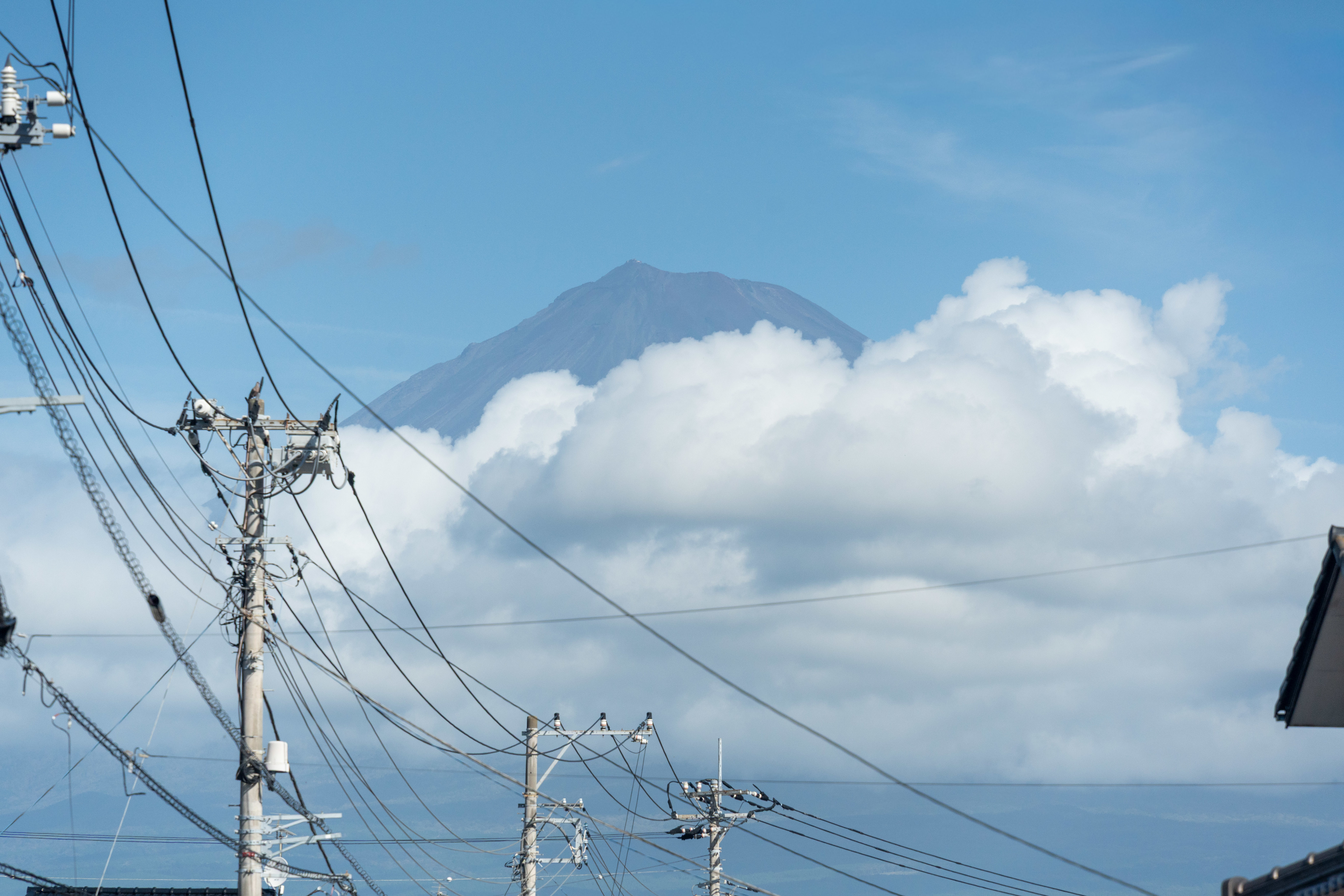
Past Hakone, we were reunited with the ocean again. Mt.Fuji is really close now, and it’s almost intimidating. Its top was hiding in cloud, so I kept peeking for a camera opportunity. This is the shot I got. The power lines I got in front emphasized the height of the mountain, it came out great.
One of the food stops we made was at a restaurant 400 years old. They proudly hang a ukiyo-e from Hiroshige Andoh from that era, featuring this exact restaurant. I give it to them that not many restaurants get to brag about being depicted in a classic art like that. When I was young, I used to place a lot of value on innovating new things, but lately I started to appreciate the importance of carrying a torch forward. 400 years, though, put that to a whole new level.
This restaurant is in one of the 53 rest stop villeages, but it appeared as if this was the only thing that survived the time. There was a small wooden marker on the side of the road commemorating the site of the head inn at this village, where the noble class would stay, but behind that marker, a construction was going and a new residential home was being built. If the map didn’t say so, this would have been just another random residential street. Time can be relentless like that, but I also felt the resilience of people. When times changed, they changed.
We arrived at a family-owned traditional Japanese inn for the night under drizzle. This place used to be just restaurant, they said, but during the pandemic they switched to restaurant/inn. Taking the bath, it almost felt like I was borrowing somebody’s home.
This trip is going very well so far.
Day 3
Since we were the only guests at the restaurant (AFAICT), they prepared our breakfast early, and we rolled out 7:30am.
We were right before the biggest river along this entire Tokaido route, Ooigawa (大井川). Mere two centuries ago, there was no bridge over this river, and people had to cross on the shoulders of the laborers whose job was to wade through the river!
The museum featured a wax figure of those laborers. Half naked, very musculine, crossing his arms, and gazing at me. It made me wonder the musculine culture of the place & the time, and the pride this place has today for that heritage.
Our first stop today was a wooden pedestrian bridge over the Ooigawa river. We got there, and we saw this narrow straight bridge whose length must be close to a kilometer. It said put 100 yen into thix box to cross, which meant this bridge was in active use! Delighted, we rode up. There was no hand rails, the bridge was pretty narrow and reasonably elevated from the river bed. It was a pretty scary experience.
In the old pictures they had, the bridge looked even scarier. It speaks to the civil engineering challenges of building a bridge over this ricer. No wonder there weren’t any bridges. Just another thing we take for granted.
Past the Ooigawa river, the road went through mountains and the scenery decidedly turned rural. The historical sites look so much more authentic in this setup.
Civilization came back. We entered the city of Kakegawa. We rode through a quiet main street, and stopped by at a small local castle.
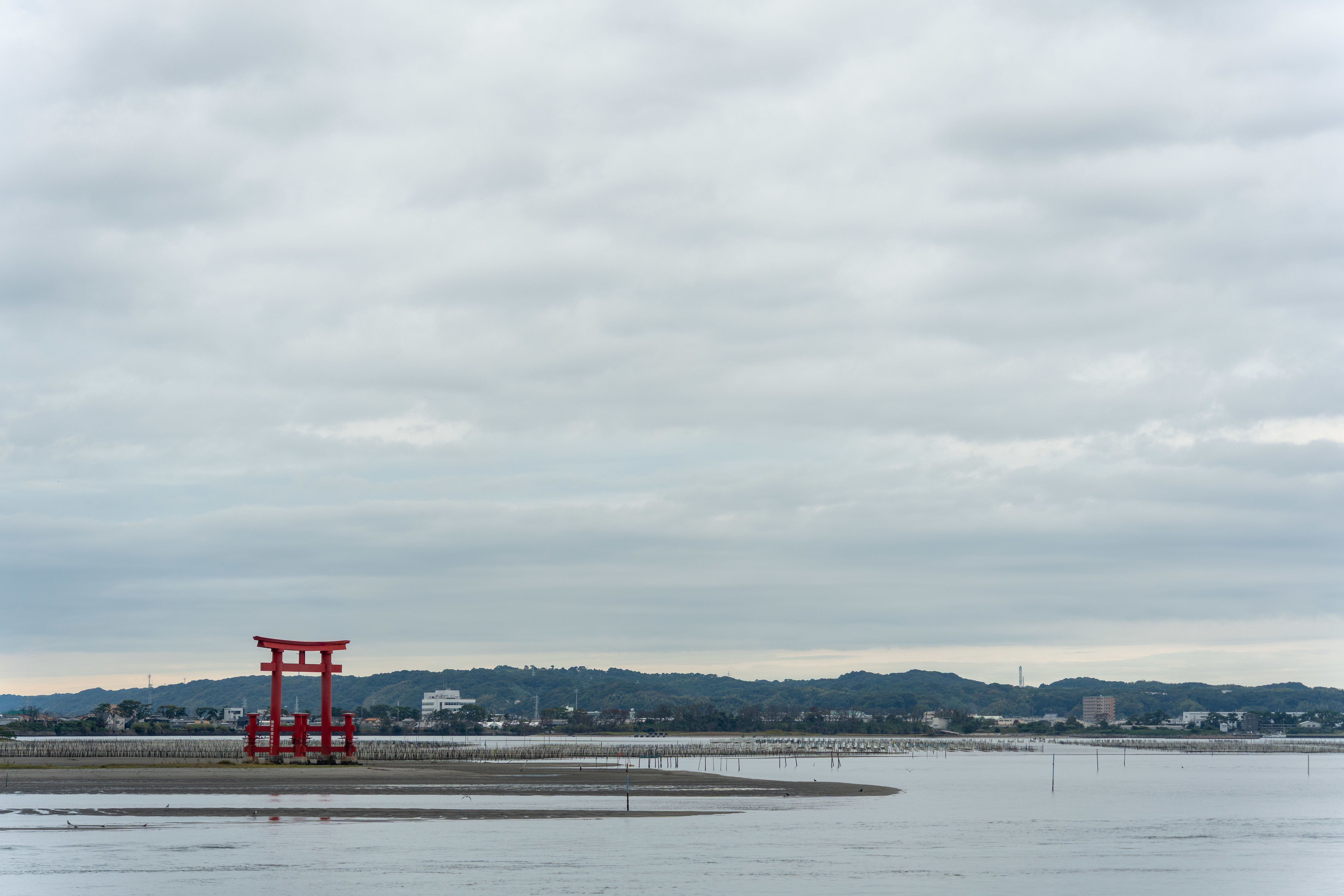
Later in the day, we hit Hamanako lake (浜名湖). It’s always exciting to hit a big body of water. We made a bit of detour to enjoy the lake side ride. Just as I was going under the raised bed of the bullet trains, one went over my head at its top speed. That much mass, going at 250km/h or 150mph, this close to you… it’s awe-inspiring. Yet anothe engineering accomplishment of the modern era.
We had one ramen lunch, but I couldn’t find us a good second lunch. Perhaps because of that, somewhere further out but before a climb, I bonked. I took a bit of break, ate the food I was carrying, and I got going again.
The Futakawa village, another one of those 53 rest stop villages, was beautifully preserved. We were looking for a sweet place to recharge our energy, and in that process we found some local elders exhibiting their proud rock collections. Each one of those carefully potted, named, an displayed. I love hearing from people who are passionate about whatever, and they had all the time in the world. We had a wonderful moment. But we had to keep going. We still got another 30km or so to cover.
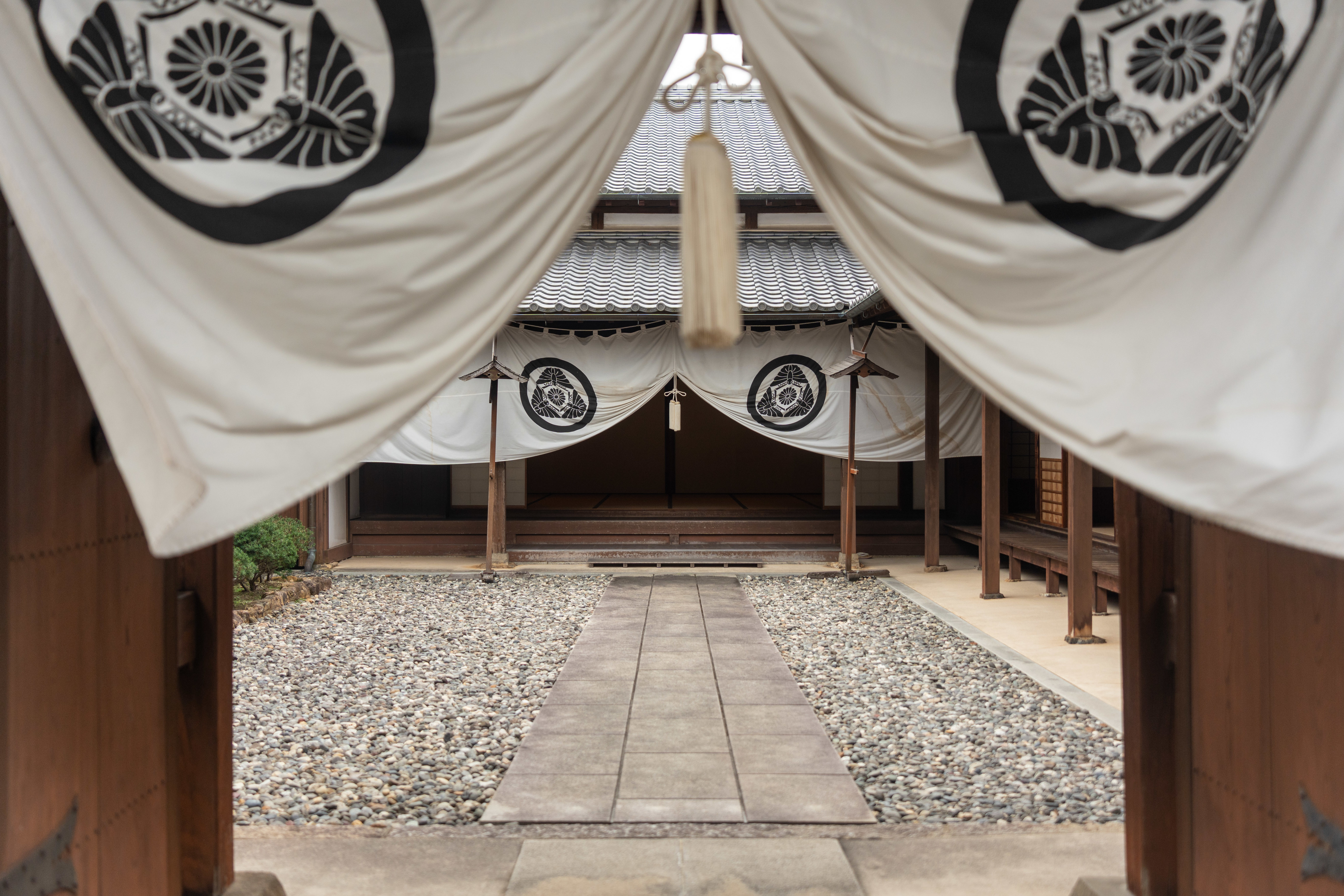 We stopped for beer quickly, and ended the day at a big resort hotel by the Mikawa bay (三河湾). We had a commanding view of the bay from our room, and the sunset time was incredible. There were hardly any guests staying here, either.
Day 4
I woke up early in the morning, as I do, and I clicked some pictures. I waited for the public bath to open, and a guard took a pity on me and he let me in earlier. Thanks to him, I had the whole place to myself. He said he does triathlon, so we had a bit of conversation about my bike. He then immediately profusely apologized for stepping over the boundary and “bothering me”. That’s a very Asian move, but I felt both his professionalism and his warmth, and that moved me.
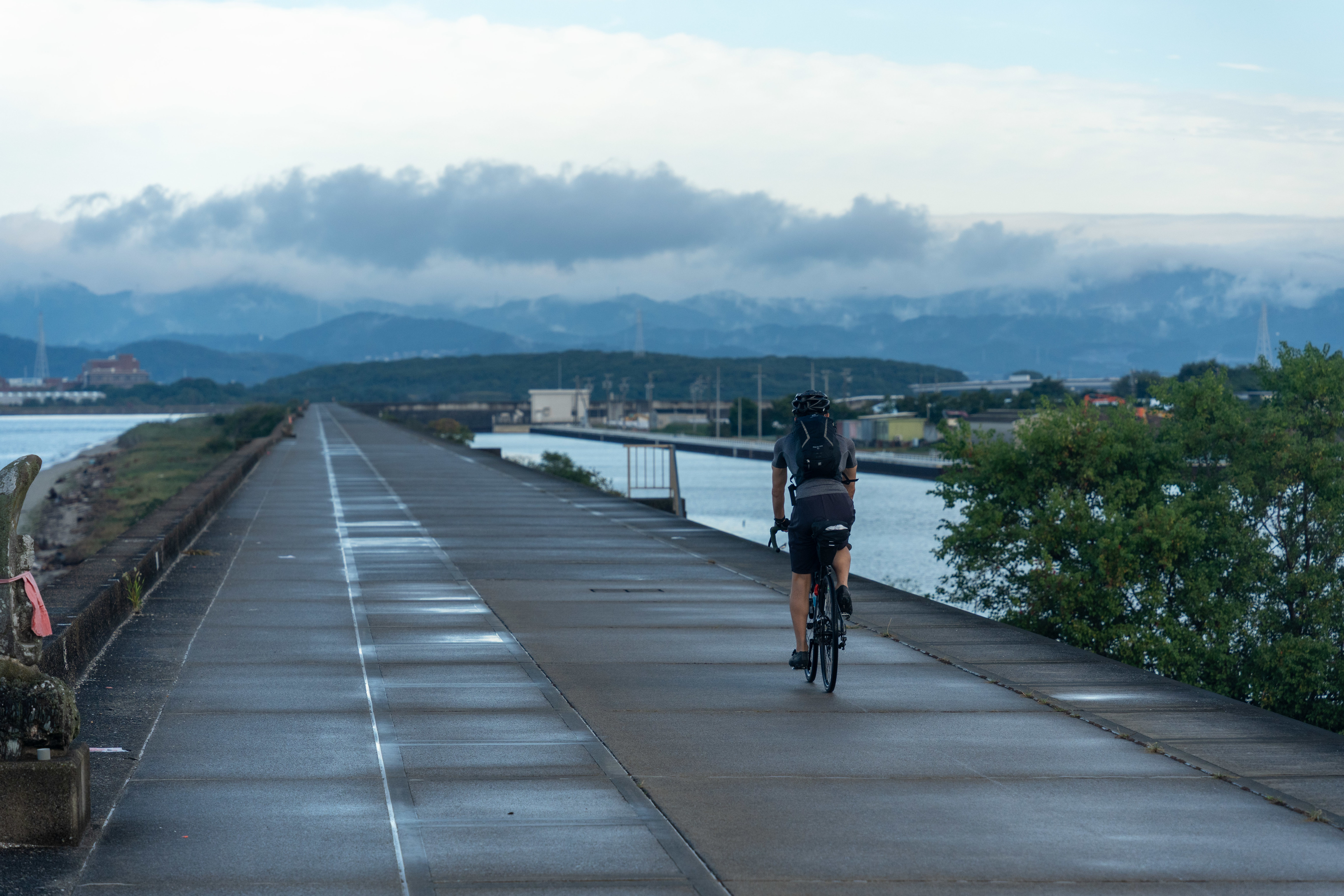
We both filled ourselves to the brim with breakfast buffet, and we rolled out. Rain over night really cleared the air, and moisture rising from the mountains created purple cloud. Such a beautiful day to ride.
We rode a busy car road for a while, then we turned right to Tokaido, which in this are is more of a residential street. Bike riding is so up close to people’s daily lives. I love these sections where you get a real glimpse into the local life.
As we headed to Nagoya (名古屋), the road got really busy. The urban sprawl went on endlessly. This was perhaps the least enjoyable section of the whole route. Most drivers passed me with a safe distance, and I have a relatively high tolerance for cars passing me close, but even for me, at times things were scary. I probably should have chosen a different route.
In Nagoya, we made a stop at the Atsuta jingu shrine. A historical, very prestigious shrine. We sat and ate noodles here. I noticed that two young women behind me was deeply engaged in a conversation where one lady was bitterly complaining about how a common friend of theirs just keep imitating her fashion, jewelry, whatever. She went on for the whole time I was there, and I was kind of impressed with her ability to remember and replay the emotion in such gorgeous details. The other woman was acknowledging her feelings, but she was also making the point I wish she would make; for example, if it bothers her that much, she needs to say so! According to the first woman complaining, their common friend does seek a permission to buy something similar! Such emotional maturity, and incredible patience. What can I say, the world was peaceful on that day.
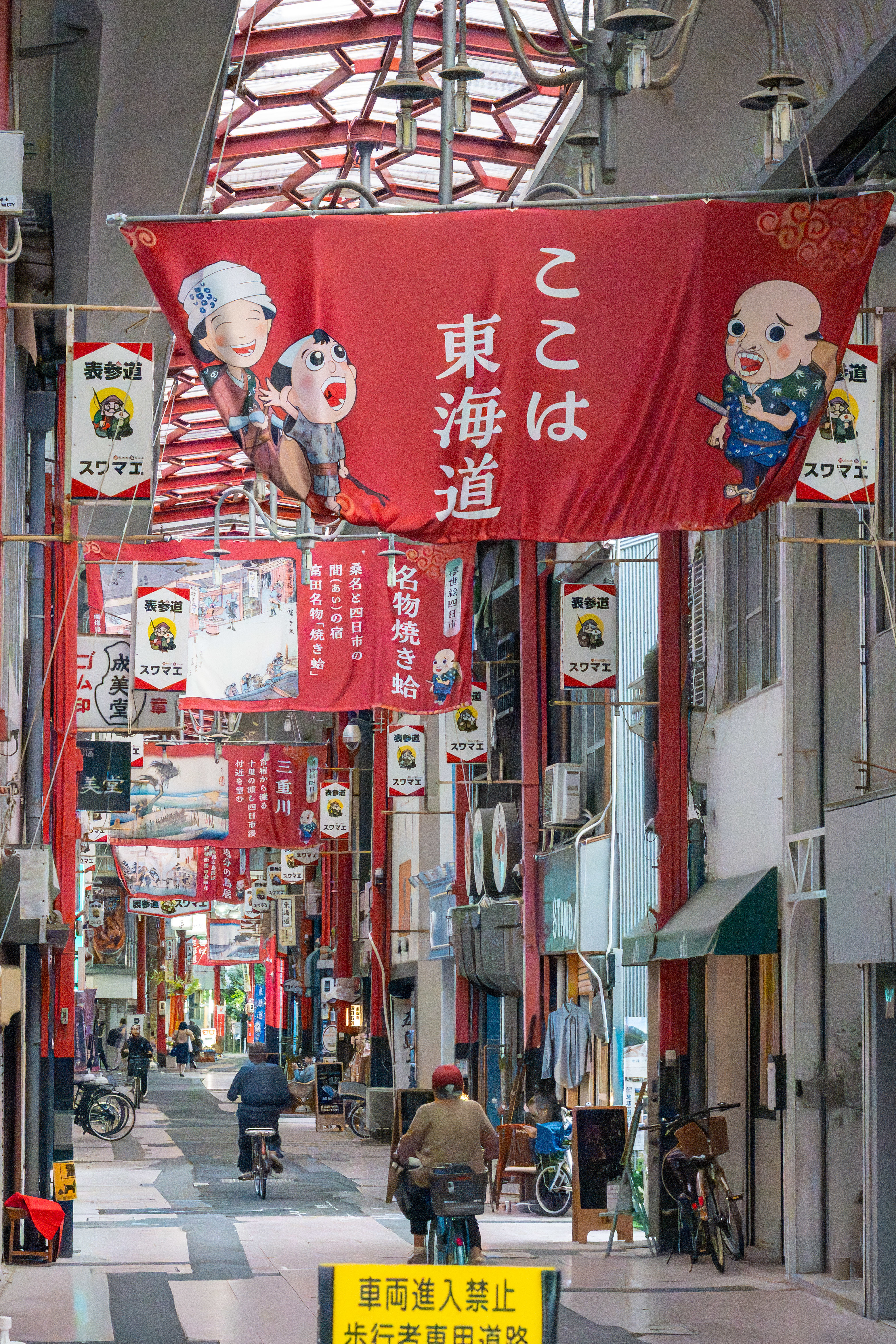
Once we left Nagoya, things to a little better. From time to time, Tokaido left the busy car road and became a small residential road connecting one village to next. Because we started a little late on this day, the day was ending soon. No beer stop for us today. What a bummer.
We got to our hotel at the Suzuka circuit just about the time when the Sun went down There was a truly breathtaking red sunset, but by the time I came back with my camera in my hand, that was already over. Darn.
I can’t believe this trip is almost over.
Day 5
The road was much better today, as we mostly avoided the busy car roads. I’ve never been to this part of Japan, and I’m seeing a lot more of the rice fields. More houses look classic here. Big wooden pillars and beams, and highly decorated roofs. The road occasionally goes through the historic stops.
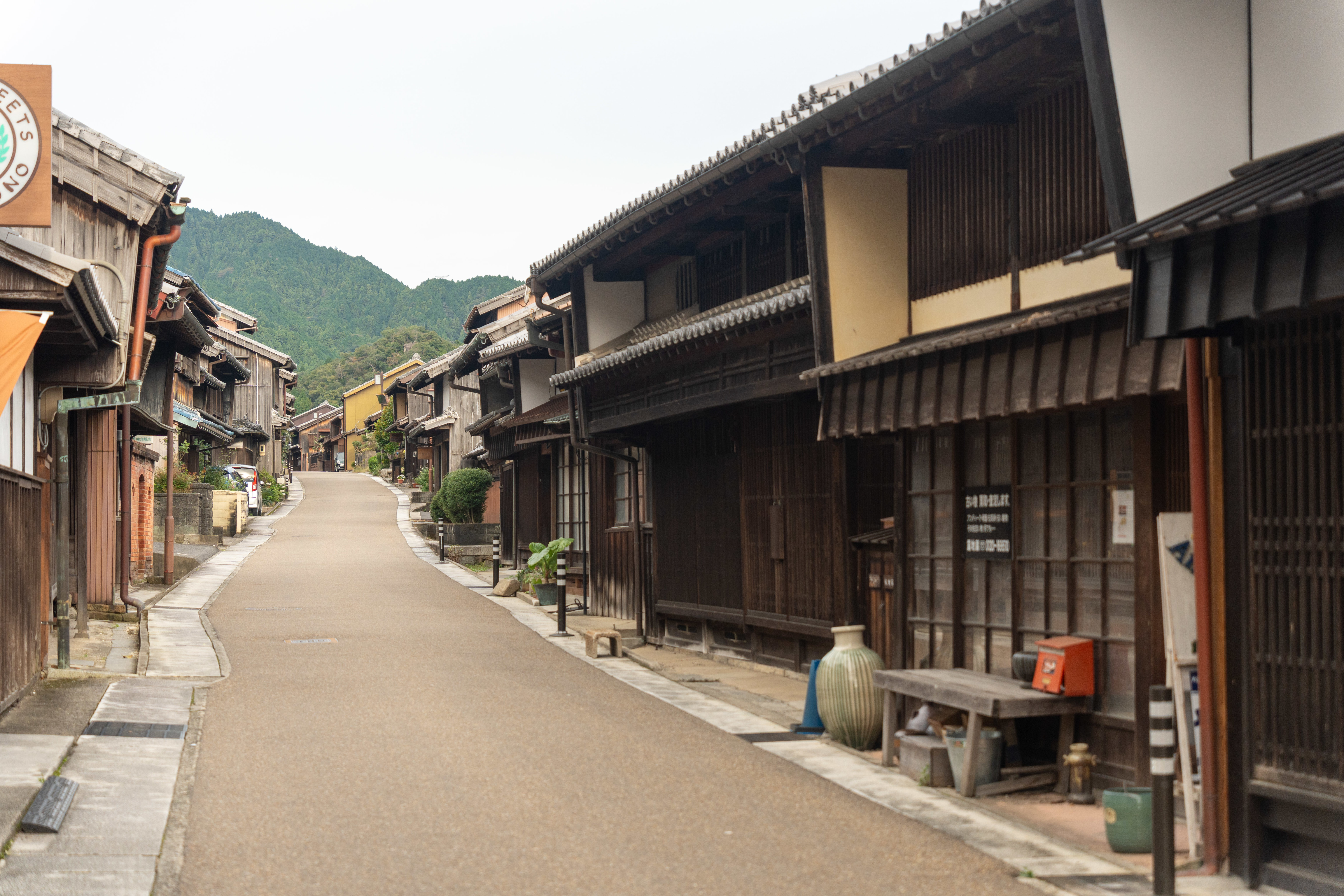
We went through the second biggest climb of this whole journey at the Suzuka mountain, and from there the road has nice smooth descent all the way to the biggest lake in Japan, the Biwa lake.
Once again, emotionally I got a little overwhelmed when the long straight road finally terminated at the lake shore. It’s the literal end of the road. This isn’t actually the end of the ride, but the end was definitely approaching.
We rode along the shore for a bit, got into a town, I was able to find a great lunch spot serving local beef. I started seeing trains whose signage said they are heading to Kyoto. Minute by minute we were getting closer to Kyoto!
The actual end of the ride was rather anti-climatic. It was at the Sanjo bridge, a major intersection, but there was very much life as usual going on there. Tourists busily walking around, cars going every which way, and nobody paid any attention to us. There wasn’t even a signage that commemorates the end of this historic road. Perhaps for Kyoto, this was just one of many roads that led to rural areas of Japan!
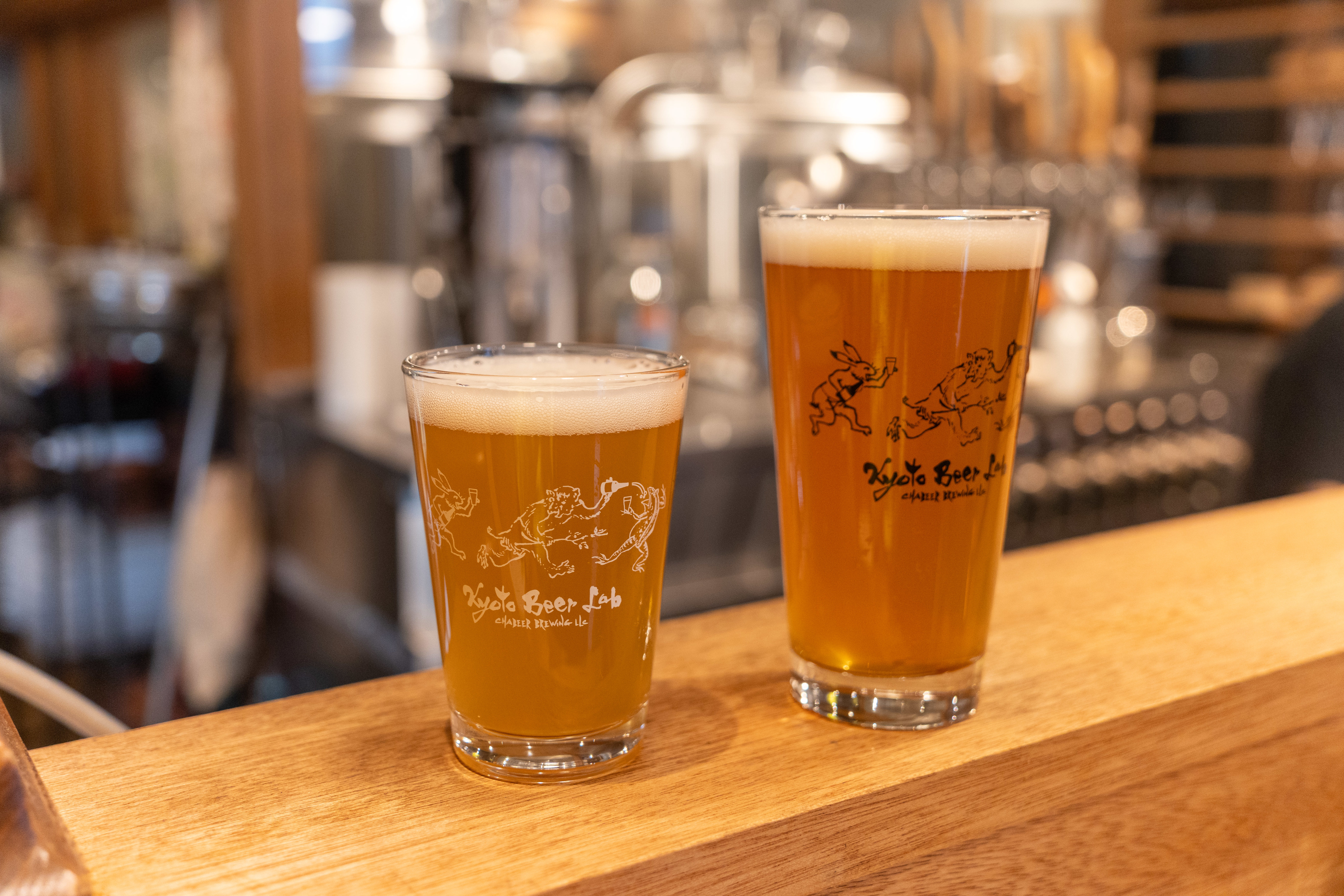
We celebrated our accomplishments and safe arrivals by having beer, then we hopped on a bullet train heading back to Tokyo. It was perhaps on this train I felt the true closure of this epic journey.
For about 2 hours, I’ve seen our entire journey played back, in reverse, right outside the train window. I could see the towns we passed, rivers we crossed, the mountains we rode by. From time to time I could literally spot the exact roads we rode. Those were mere few days ago, but it felt like such a long time ago, too. And the train was going so fast!
What an epic adventure it was. I’m so grateful I’m alive.
Now I’m wondering where next.
(See the entire picture collection at ↓)
